 Skip to main content


Every school, club, and workplace needs to know who showed up — but the best way to track attendance depends on the size of the group, the budget, and what the data will be used for. A paper register works beautifully for a class of twenty and falls apart for a factory of two thousand. This guide compares seven proven methods for tracking attendance, from the humble sign-in sheet to biometric systems, with honest pros and cons for each. By the end, choosing the right method for any situation becomes straightforward.
Why the Tracking Method Matters
The method shapes the data. A system that is slow or annoying to use produces gaps, guesses, and late entries — and unreliable data leads to unreliable decisions. A good method is fast enough to use every single day, accurate enough to trust, and simple enough that everyone actually follows it. It also determines what becomes possible later: paper records make trend analysis painful, while digital systems can flag chronic absence automatically. Attendance Works emphasizes that consistent, accurate tracking is the foundation of every successful attendance strategy. Getting the method right is not an administrative detail — it is the whole game.
Paper Registers and Sign-In Sheets
The classic method is a printed grid where each person signs in or gets marked present by whoever is in charge. The advantages are real: zero cost, no technology required, it works during power outages, and marking takes seconds per person in small groups. The downsides are equally real: handwriting can be illegible, sheets get lost or damaged, and turning a month of marks into percentages means manual counting or retyping everything into a computer. Paper suits small classes, workshops, volunteer events, and any setting where technology is unreliable. For groups under thirty people, it remains surprisingly competitive.
Spreadsheets
A shared spreadsheet upgrades the paper register with automatic math. The strengths are clear: it is free, formulas calculate totals and percentages instantly, and the file can be shared with multiple staff members who all see the same live data. The weaknesses: someone must still enter every mark by hand, very large files get slow, and a single wrong edit can break formulas for everyone downstream. Spreadsheets suit small to medium groups that want better reporting without buying software. Many schools start here and stay here for years — it is the sweet spot between effort and insight, and it keeps the raw data fully in the team’s control.
Attendance Apps
Mobile apps let staff mark attendance on a phone or tablet, often with photos or notes attached to each record. They are fast and portable, data syncs to the cloud automatically, and many apps generate summary reports with a single tap. On the other hand, they require devices and reasonably reliable internet, staff need at least basic training, and free versions often cap the number of users or records. Apps suit field teams, coaching staff, and schools where teachers move between rooms all day. When evaluating options, prioritize offline mode — attendance still needs recording on the days the Wi-Fi goes down.
QR Code Check-Ins
How QR Code Check-Ins Work
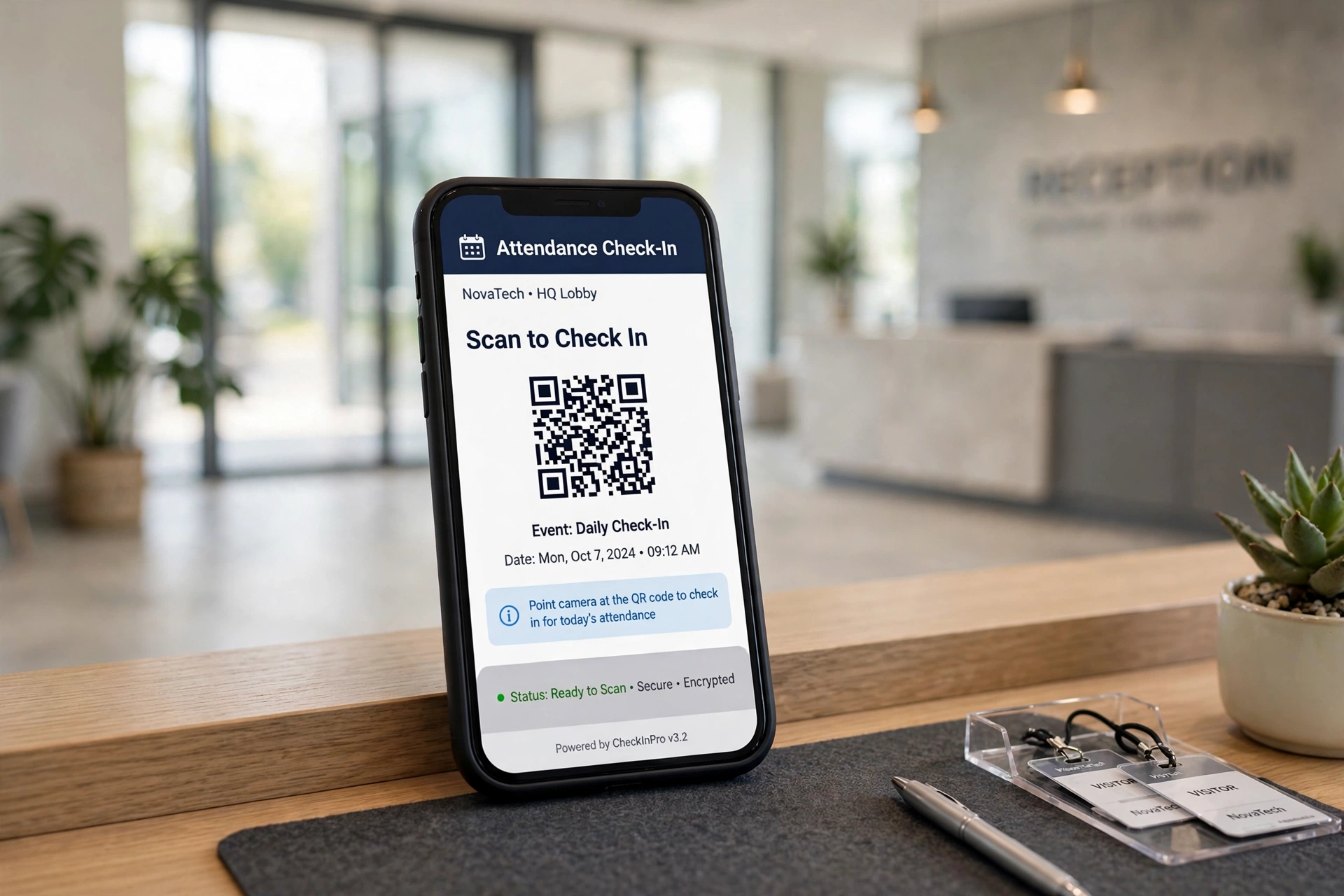
Each attendee scans a posted QR code with their phone, which opens a short form pre-filled with the date and session name. Submitting the form logs their attendance with an automatic timestamp, and responses flow straight into a spreadsheet. Setup takes minutes: generate the code with any free QR tool, print it large enough to scan from a few feet away, and link it to a form that feeds a tracking sheet. There is no app to install and no account for attendees to create.
Best Situations for QR Codes
QR check-ins shine for large lectures, conferences, orientations, and training sessions where circulating a paper register would eat twenty minutes. They also work well for recurring club meetings and gym classes. The main risk is buddy scanning — one person scanning the code for an absent friend — so pair the system with random spot checks or location verification in high-stakes settings. Used with that safeguard, QR codes deliver near-automatic tracking at essentially zero cost.
Biometric Systems
Fingerprint or facial recognition terminals record attendance the moment someone arrives, with no action required beyond standing in front of the device. They are nearly impossible to fake, fully automatic, and their timestamps are precise to the second. The trade-offs are significant: expensive hardware, genuine privacy concerns that demand clear written policies and consent, and occasional false rejections that frustrate legitimate users. Biometrics suit workplaces with strict timekeeping needs, large headcounts, and regulated industries. Schools rarely need this level of control, and the privacy conversation alone makes it a heavy choice for education settings.
Learning Platform Reports
Schools and training organizations that already use a learning management system can pull attendance signals from login and activity data. The appeal is obvious: no extra effort is required because the data already exists, and reports can show depth of engagement rather than just a binary present-or-absent. The limitation is equally obvious: logging in is not the same as participating, and platform data misses every in-person nuance. This method suits online courses, blended learning programs, and any setup where the platform is already central to daily work. Treat LMS data as a complement to physical attendance records, not a replacement for them.
HR and Time-Tracking Software
For workplaces, dedicated HR software ties attendance directly to payroll, leave balances, and shift scheduling. It creates a single source of truth, calculates absence rates automatically, and produces compliance-ready reports for audits or labor regulations. The costs are real: licensing fees, implementation time, and more complexity than a small team will ever need. This category suits companies with fifty or more employees, shift-based work, or strict labor rules. The attendance percentage these systems report uses the same basic math as the free calculator on the homepage (attendance percentage calculator), just wrapped in automation and approval workflows.
Choosing the Right Method for Your Situation
Questions to Ask Before Deciding
Start with the practical facts: how many people, what budget, and how reliable is the internet at the location. Then ask who will enter the data, who will read the reports, and how often those reports matter. A youth soccer team needs a phone app; a 500-person factory needs badge scanners; a classroom needs whatever the teacher will actually use every morning without fail. Match the tool to the reality of daily use, not to an idealized vision. Schools dealing with persistent absence may also want to understand what a truancy officer actually does, since tracking data is what triggers those interventions.
Also weigh how much accuracy the situation demands. If attendance affects pay, grades, or legal compliance, invest in verification — timestamps, spot checks, or biometrics. If it simply informs parents and teachers, a spreadsheet is plenty. And consider who owns the system: the best method is the one with a clear owner who keeps it running when the initial enthusiasm fades.
Avoiding Common Tracking Pitfalls
Whatever method is chosen, the same mistakes recur across organizations. Marking attendance from memory at the end of the week instead of in the moment. Using inconsistent codes across different staff members. Letting one person become the only one who understands how the system works, creating a single point of failure. And the biggest one: collecting data that nobody ever reviews — tracking without follow-up is just paperwork with extra steps. Build a simple routine instead: record daily, review weekly, and act on patterns monthly. Guidance on how to improve school attendance shows what effective follow-up looks like once the numbers reveal who needs help.
There is no single best way to track attendance — only the best way for a given group. Paper suits small gatherings, spreadsheets suit growing teams, apps and QR codes suit mobile and large groups, and biometric or HR systems suit workplaces where precision pays for itself. The right choice is the one that gets used accurately every day, because consistent data beats sophisticated data every time. Pick the simplest method that meets the need, review the numbers on a regular rhythm, and let the patterns guide the response.
Frequently Asked Questions
What is the easiest way to track attendance? For small groups, a paper sign-in sheet or a simple spreadsheet is easiest to start with. For larger or mobile groups, a phone app or QR code check-in removes the manual bottleneck and scales better.
How do schools usually track attendance? Most schools use a digital student information system, typically fed by teachers marking a register or an app each morning. Smaller programs and individual classrooms still use paper registers or spreadsheets.
Can attendance be tracked automatically? Yes. Biometric terminals, badge scanners, QR code check-ins, and learning platform login reports all record attendance without manual marking, though each requires setup and comes with its own trade-offs.
What is the most accurate attendance method? Biometric systems are the hardest to fake, but accuracy also depends on consistent daily use. A simple method used reliably every day beats a sophisticated one that staff use sporadically.
How often should attendance data be reviewed? Record daily, review weekly for emerging patterns, and do a deeper monthly review of trends. Regular review is what turns raw attendance data into timely, effective action.


