 Skip to main content


Few phrases cause as much end-of-semester panic as “attendance shortage.” It appears on a noticeboard list or a portal alert, and suddenly a student who was focused on exams is worried about something else entirely: whether they will even be allowed to sit for them. This guide explains what an attendance shortage is, how the condonation process works, who qualifies, what documents are needed, and — most importantly — how to recover when the numbers slip below the line.
What “Attendance Shortage” Actually Means
An attendance shortage is simply the gap between the attendance a student has and the attendance their institution requires. If a college demands 75% attendance and a student has 68%, the shortage is 7 percentage points. It is not a punishment in itself; it is a measurement. But that measurement has consequences, because most universities tie examination eligibility directly to it.
Shortages usually build silently. A week of illness here, a family function there, a few skipped morning lectures — each absence looks harmless alone. Together, across a 90-day semester, they compound. By the time the consolidated attendance is published, the student is staring at 71% and a formal notice. Understanding the math early is the difference between a manageable fix and a crisis.
How Attendance Percentage Is Calculated
The formula is straightforward:
Attendance % = (Classes attended ÷ Classes conducted) × 100
If 60 lectures were conducted in a subject and the student attended 45, the attendance is (45 ÷ 60) × 100 = 75%. Most institutions calculate this per subject as well as in aggregate across all subjects. Some apply the 75% rule to the aggregate; others enforce it subject by subject, meaning a student can be blocked from one paper’s exam while clearing the rest. Students should check which version their college uses — it is usually stated in the student handbook or examination regulations at the start of the semester.
What Happens When Attendance Falls Below 75%
Seventy-five percent is the standard minimum across most Indian universities and many institutions worldwide. Falling below it normally triggers a staged response. First comes a warning — often at 75% itself, flagging that any further absence creates a shortage. Then, if the final figure lands below the threshold, the student is typically marked ineligible for the end-semester examination in the affected subjects until the shortage is resolved through condonation or other remedies. The detailed consequences vary by institution, and students facing this situation should read up on what happens if attendance falls below 75 percent to understand the full chain of effects, from exam bars to detention.
The key point: a shortage below 75% is not automatically the end of the semester. Institutions built the condonation system precisely for this situation.
Condonation Explained: The Formal Waiver
Condonation of attendance shortage is the institution’s formal mechanism for waiving the shortfall — partially or fully — so the student can appear for examinations. The word comes from “condone,” meaning to overlook or forgive, and that is exactly what happens: the university agrees to overlook a defined portion of the shortage on recognized grounds.
Condonation is a discretionary grant, not a right. It is decided by the head of department, the principal, or the examination authority, and the same application can be approved for one student and declined for another depending on the grounds, the documentation, and the student’s overall record. Understanding this framing matters: a condonation application is a request that must be justified, not a formality to be rushed through.
Who Qualifies for Condonation
Institutions recognize a fairly consistent set of grounds:
- Medical reasons — illness, hospitalization, or injury, supported by a certificate from a registered medical practitioner. This is by far the most common and most accepted ground.
- Official representation — participating in sports, cultural events, NCC or NSS camps, or academic competitions on behalf of the institution, with endorsement from the concerned office.
- Family emergencies — bereavement or serious family situations, considered case by case.
- Placement-related activities — some universities condone absences for approved placement drives and interviews.
What rarely qualifies: undocumented personal trips, part-time work, or simply oversleeping. The grounds need to be genuine and, crucially, documented.
The 65% to 75% Condonation Window
Most institutions set the condonable band at roughly 10 percentage points below the minimum — so where 75% is required, attendance between about 65% and 75% can typically be condoned. This is the standard seen across Indian university regulations: the shortage within this window is waivable on valid grounds, while attendance below the floor of the window generally is not condonable at all.
That floor matters enormously. A student at 71% and a student at 64% are in completely different situations — the first has a paperwork problem, the second has a repeat-the-semester problem. This is why tracking attendance through the semester, rather than discovering the figure at the end, is so valuable.
How to Apply for Condonation: Step by Step
The exact procedure varies, but the standard sequence at most colleges looks like this:
- Get the official attendance figure. Collect the consolidated attendance from the department office or student portal. Do not apply based on a personal estimate — the application must cite the official number.
- Collect the prescribed form. Most colleges have a specific “Application for Condonation of Shortage of Attendance” form, available at the college office or on the website.
- Assemble supporting documents. For medical grounds, a certificate from a registered medical practitioner covering the absence dates, plus any prescriptions or discharge summaries. For official duty, the endorsement letter from the sports officer, NCC unit, or event coordinator. Keep photocopies of everything.
- Write a clear covering statement. State the attendance percentage, the subjects affected, the reason for the shortage, and the dates involved. Keep it factual and brief — administrators process dozens of these.
- Get the tutor or class advisor’s recommendation. Many institutions require the class tutor’s endorsement before the application moves forward. Applications without it are often not entertained at all.
- Submit within the deadline. This is typically within a few working days of the shortage being notified — often five working days. Late applications are routinely rejected regardless of merit.
- Pay the condonation fee on approval. Fees vary by institution — commonly a modest per-subject or per-semester amount paid at the college office. Keep the receipt; it is part of the official record.
Research on chronic absenteeism consistently shows that early intervention beats end-of-term fixes, a point emphasized by organizations like Attendance Works, which tracks how absence patterns predict academic outcomes. The same logic applies in college: the earlier a shortage is spotted, the more options exist.
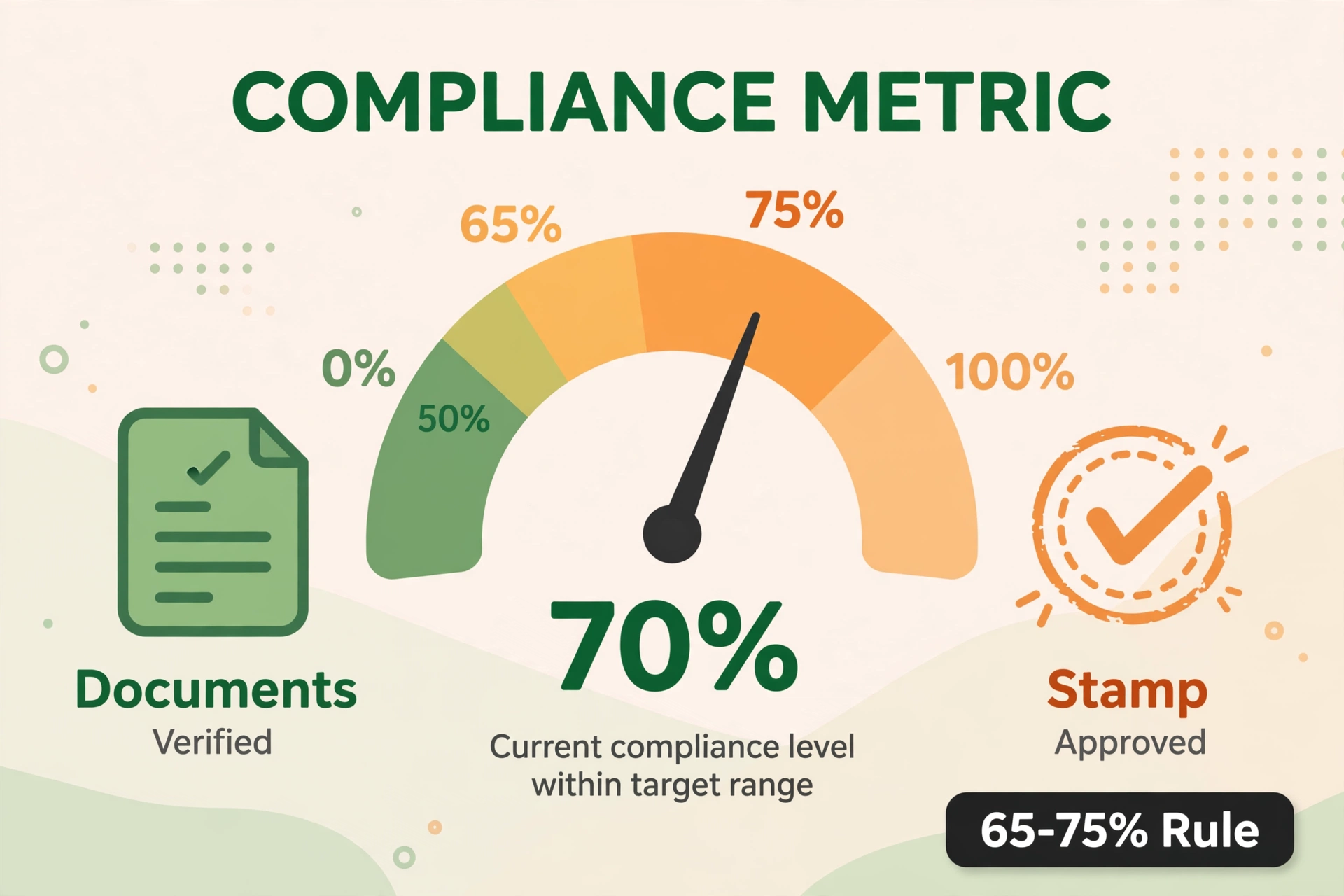
The condonation window: attendance between roughly 65% and 75% can usually be condoned on valid documented grounds.
Condonation Fees, Deadlines and Limits
Three practical constraints students often underestimate:
- Fees vary widely. Some colleges charge a nominal per-course fee; others charge per semester. The amount is set by the institution and is non-negotiable, so students should confirm the figure at the college office rather than relying on what a senior paid two years ago.
- Deadlines are strict. The window between the shortage notification and the application deadline is short by design. Mark it the day the notice appears.
- Limits on frequency. Many universities allow condonation only a fixed number of times during a program — sometimes once per program, sometimes up to a few semesters. A student who burns their condonation in the second semester has no safety net left in the sixth.
Condonation vs Exemption: Know the Difference
Students often use these terms interchangeably, but institutions usually distinguish them:
- Condonation forgives a shortage after it happens. The absence is recorded, but examination eligibility is granted anyway, typically on documented grounds and within the condonable band.
- Exemption treats certain absences as if they never occurred. Official-duty absences — NCC camps, university sports representation — are the classic case: the attendance is recalculated as though the student had been present, or the requirement is waived for those days entirely.
Exemption is the stronger remedy, but it applies to a narrower set of pre-approved situations. Condonation is the broader safety net for everything else.
Below the Condonable Limit: Detention and Repeating
If attendance falls below the condonable floor — commonly under 65% where 75% is the norm — condonation is off the table. The standard consequence is detention: the student is debarred from the end-semester examinations and must re-register for the course or repeat the semester in a later term, usually paying the term fees again.
Some institutions offer a middle path: a student between the condonable floor and a lower absolute floor may be allowed to continue to the next semester but must clear the backlog papers as supplementary examinations later. Below that absolute floor, readmission may be required. None of these outcomes is pleasant, but all of them are published in advance in the academic regulations — the rules are knowable before the semester starts, which is when they are most useful.
How to Recover and Stay Above 75%
For a student currently sitting in the shortage zone, recovery is arithmetic plus discipline:
- Calculate exactly how many classes remain. If 15 sessions are left and attendance is at 70% of 60 conducted, attending all 15 brings the total to (42 + 15) ÷ 75 = 76%. The numbers often show the target is reachable.
- Attend everything. No selective skipping until the figure is safely above the threshold with margin.
- Use an attendance tracker. Running the numbers weekly with a 75 percent attendance calculator turns a vague worry into a concrete plan — it shows exactly how many more classes can be missed, if any.
- Learn the formula cold. Students who can compute their own attendance percentage never get surprised by the noticeboard.
- Document absences as they happen. If illness strikes mid-semester, get the medical certificate immediately — reconstructing documentation months later is far harder.
- Talk to the class advisor early. Advisors can confirm the official figures and flag whether the shortage is condonable long before the formal notice.
The broader habit is simple: treat 80%, not 75%, as the personal target. That five-point buffer absorbs the inevitable sick days without ever entering the shortage zone.
Frequently Asked Questions
What is an attendance shortage?
An attendance shortage is the gap between a student’s actual attendance percentage and the minimum their institution requires — typically 75%. A student with 68% attendance at a 75%-rule college has a 7-point shortage.
What is condonation of attendance?
Condonation is the institution’s formal waiver of an attendance shortfall, granted on recognized grounds like illness or official duty, allowing the student to appear for examinations despite being below the minimum. It is discretionary, not automatic.
Can attendance below 65% be condoned?
Generally no. Most institutions set the condonable window at roughly 65% to 75% (where 75% is the minimum). Below that floor, the standard outcome is detention — repeating the course or semester — rather than condonation.
What documents are needed for a condonation application?
For medical grounds: a certificate from a registered medical practitioner covering the absence dates, plus supporting prescriptions or discharge papers. For official duty: an endorsement letter from the relevant authority (sports officer, NCC unit, event coordinator). Most colleges also require the class tutor’s recommendation on the application.
Is condonation guaranteed once I apply?
No. Condonation is a discretionary grant by the department head, principal, or examination authority. Approval depends on the genuineness of the grounds, the strength of documentation, the student’s overall record, and whether the program’s condonation limit has already been used.
Does a condoned shortage affect my marks or grades?
Condonation restores examination eligibility; it does not change marks. However, the absences themselves may have already cost internal assessment marks or practical marks tied to attendance, which condonation does not reverse.


