
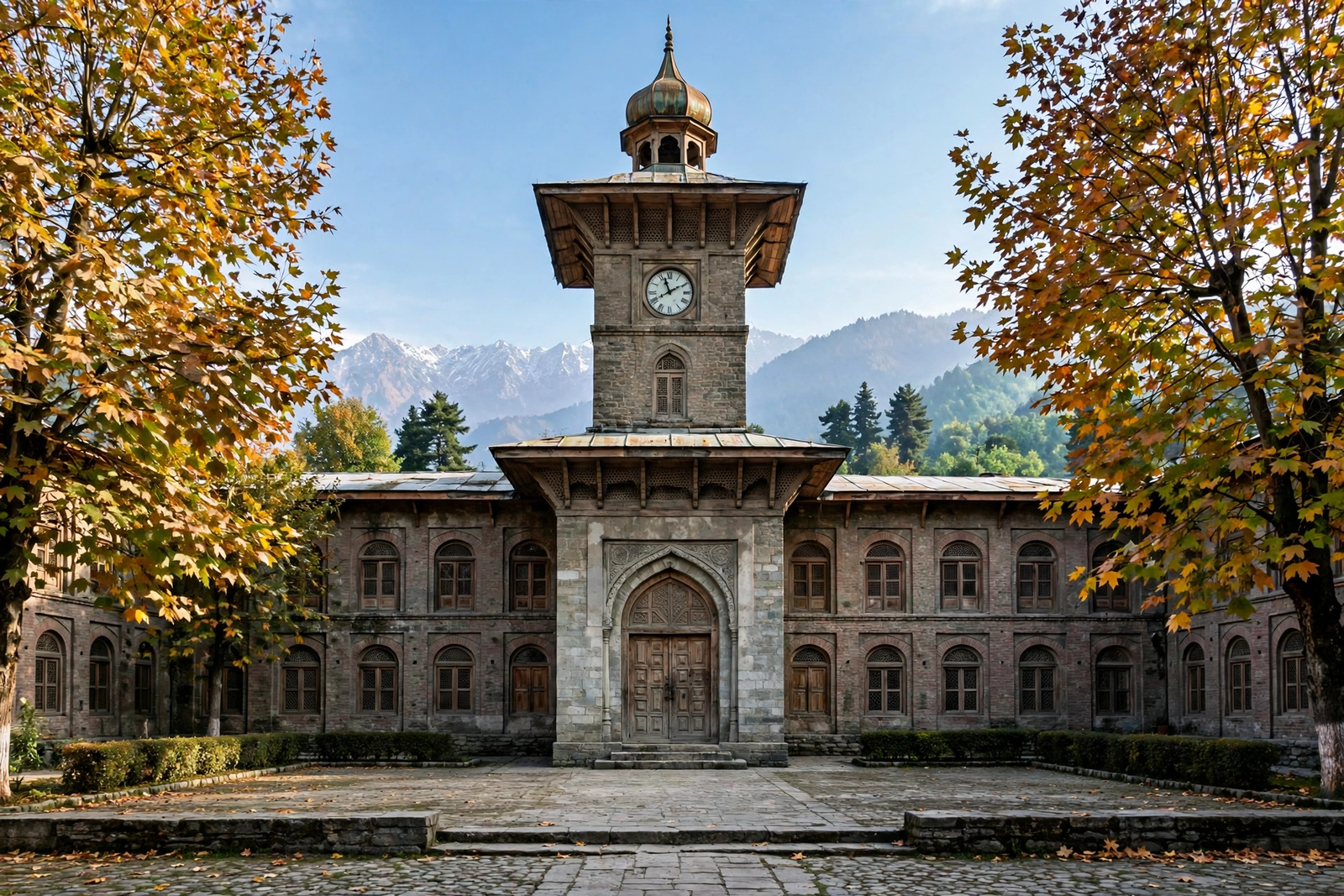
A surprise visit to one college in Baramulla has turned into a direction for every Government Degree College in Jammu and Kashmir. On November 2, a district administration team inspected Government Degree College (Boys) Baramulla after reports that staff were leaving before the scheduled closing time, and the inspection reportedly found around half of the staff already gone. A day later, the Directorate of Colleges issued a fresh circular telling principals across the region to enforce working hours and attendance norms strictly, with regular biometric attendance at the centre of the order.
The story matters beyond one campus because it shows how attendance systems actually get tested. A register, a biometric device, or a circular on its own changes very little. What changes behaviour is the moment someone checks the record against reality, and then follows up in writing for every institution, not just the one that was visited. That is exactly the sequence here: an inspection, a record check, and then a region-wide instruction.
Key points, up front
- A surprise inspection at GDC (Boys) Baramulla on November 2 reportedly found around 50 per cent of staff had left before closing time.
- The Directorate of Colleges, Jammu and Kashmir, issued a circular on November 3 covering all Government Degree Colleges.
- Principals must ensure regular biometric attendance, punctuality, and uninterrupted classes.
- Staff may not leave campus during working hours without prior permission from the competent authority.
- Heads of institutions must personally monitor compliance, and violations will be viewed seriously.
A timeline: from inspection to region-wide circular
The sequence unfolded over just two days, and each step explains the next. On November 2, the district administration in Baramulla carried out a surprise inspection of Government Degree College (Boys) Baramulla, following reports of premature departure of staff. The team was headed by the Assistant Commissioner Revenue (ACR) of Baramulla, acting on the directions of the Deputy Commissioner. According to the report, around half of the staff, including heads of departments, assistant professors, and lecturers, had left the premises well before the scheduled closing time.
During that inspection, biometric attendance records were also obtained for verification. That detail is important. The inspection was not only about who was physically present at a given moment; it was also about what the attendance record said. Comparing the two — the people in the building and the record on file — is how an administration establishes the attendance status of the employees concerned and decides what further action, if any, is warranted.
On November 3, Director Colleges Jammu and Kashmir, Prof. (Dr) Twinkle Suri, issued the fresh circular. It was addressed, in effect, to the principals of all Government Degree Colleges, directing them to ensure strict compliance with attendance requirements by teaching and non-teaching staff alike. The circular noted that instances of non-adherence to prescribed working hours and unauthorised absence from duty had come to the notice of the Directorate, and that these were adversely affecting institutional discipline and the teaching-learning process.
The speed of the response is part of the message. A single inspection could have ended with action confined to one college. Instead, the Directorate used it as the occasion to restate the rules for the whole system, so that no other college could treat the Baramulla findings as someone else’s problem.
What the circular actually requires, step by step
Circulars are often written in general language, but this one breaks down into a clear chain of responsibilities. Reading it as a set of steps makes it easier to see who has to do what.
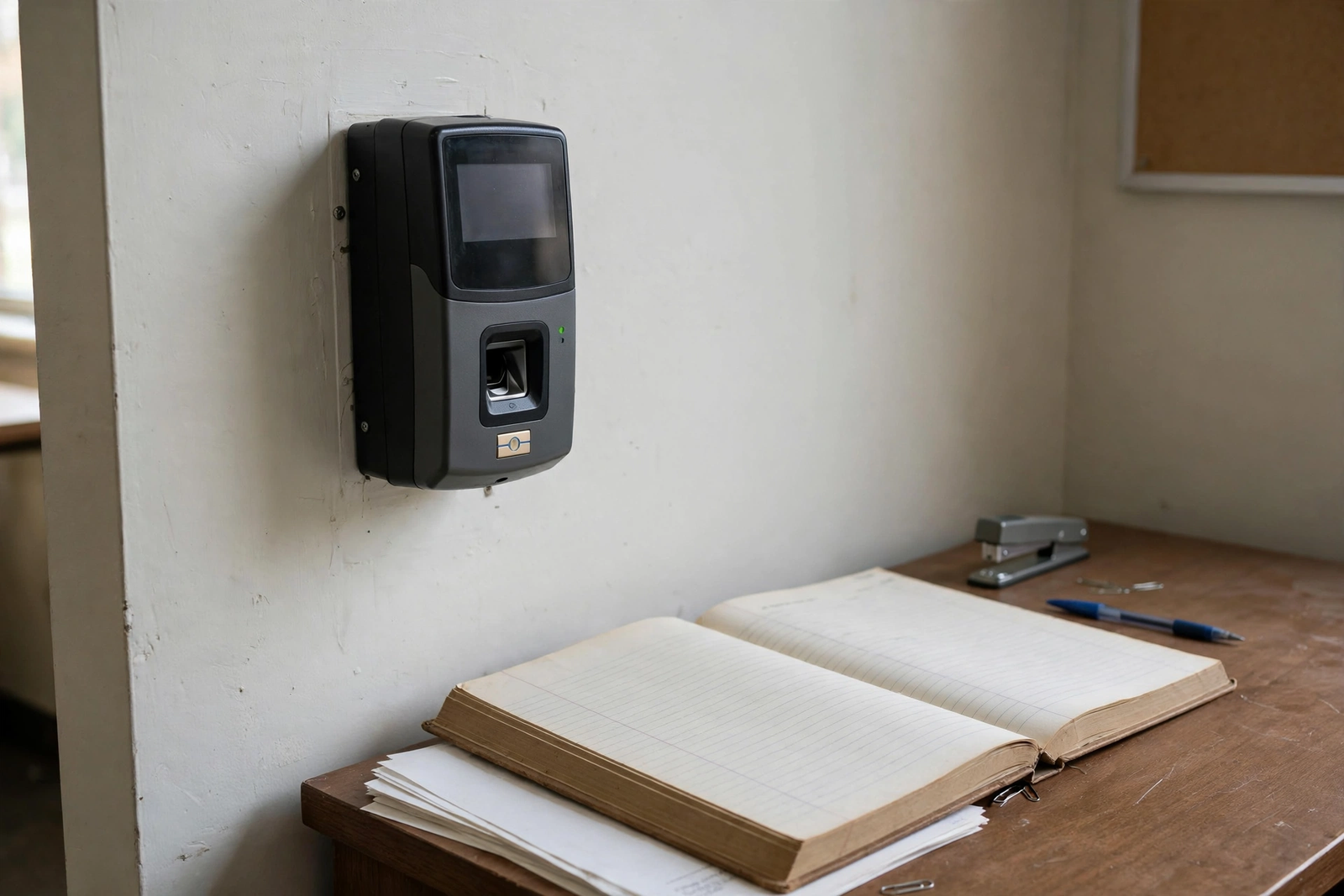
Step 1: Record attendance every day, biometrically. Institutions have been directed to ensure regular biometric attendance. In practice, that means the daily record is created by a biometric check — a fingerprint or face scan, depending on the system installed — rather than by a signature that can be entered later or on someone else’s behalf. The point of a biometric system is that the record is tied to the person, at a specific time, in a specific place.
Step 2: Keep to the prescribed working hours. Staff are expected to be present for the full working day, not only for their scheduled classes. The circular links working hours to the teaching-learning process itself: when staff leave early, classes, departmental work, student guidance, and administrative duties are all affected, even if no single lecture is missed.
Step 3: Do not leave campus without permission. Employees have been barred from leaving college premises during working hours without prior permission from the competent authority. This is the rule that speaks most directly to the Baramulla finding. Leaving early is no longer framed as an informal habit; it requires prior approval, which creates a record of its own.
Step 4: Keep classes running without interruption. The circular directs institutions to ensure the uninterrupted conduct of classes. That places attendance in its proper context. Attendance is not an end in itself. It matters because teaching, supervision, and student support depend on staff being present and available through the working day.
Step 5: Principals monitor compliance personally. Heads of institutions have been asked to personally monitor compliance and ensure accountability. This is a deliberate choice. It moves responsibility from an anonymous system to a named person in each college, so that a gap in the record has someone answerable for it.
Step 6: Incorrect information carries consequences. Employees have been cautioned that non-compliance with the directions, or submission of incorrect information, would invite strict action against the officials responsible. The circular also warns principals that any violation would invite disciplinary action under applicable rules. The wording is firm, and it applies at two levels: the employee who does not comply, and the head who does not enforce.
Before and after: what changes on the ground
For staff and students in these colleges, the circular does not invent a new idea. Working hours and attendance norms already existed. What it changes is the emphasis and the enforcement, and a comparison makes that clearer.
| Aspect | Before the circular | After the circular |
|---|---|---|
| Attendance record | Biometric systems in place, but their use could drift | Regular biometric attendance expressly required |
| Leaving campus early | Reported as a recurring practice in at least one college | Barred without prior permission from the competent authority |
| Responsibility | Spread across departments and routines | Heads of institutions must personally monitor compliance |
| Consequence | Unclear or inconsistently applied | Disciplinary action under applicable rules is expressly warned |
| Scope | Action might have stayed with one college | Direction applies to all Government Degree Colleges |
The comparison also shows why biometric records were collected during the inspection itself. A biometric log gives the administration something verifiable to work with. If a staff member’s record shows a departure time well before closing, that is a fact to be examined, not a matter of one person’s word against another’s. If the record is incomplete or inconsistent, that too is information, because it points to a gap in the system rather than only in individual conduct.
Why biometric attendance keeps coming up in college orders
Biometric attendance appears in education orders again and again, and the reasons are practical rather than technical. A manual register records what someone writes. A biometric system records a check that is much harder to make on another person’s behalf, and it stamps that check with a time. For an institution with dozens or hundreds of staff, that creates a daily dataset that a principal can actually review: who arrived, who left, and where the gaps are.
That dataset is only useful, however, if someone reads it. A device that nobody checks is no better than a register that nobody reads. The Baramulla sequence illustrates the other half of the system: inspection, verification of records, and a written direction that names the person responsible for monitoring. Technology supplies the record, but human oversight supplies the accountability.
There is also a fairness argument that runs through these orders. When attendance rules are enforced unevenly, the staff who stay for the full day carry the work of those who leave early, and students lose access to teachers and mentors who should be available. A consistent record, applied to teaching and non-teaching staff alike, is meant to remove that unevenness. The circular’s insistence that it covers both categories of staff is therefore significant, not incidental.
Students, meanwhile, feel the effects of staff attendance even when the order is not about them. A teacher who leaves early may not miss a lecture, but may miss the office hours, the laboratory supervision, or the informal guidance that students rely on between classes. An institution that runs its full day gives students the full service they enrolled for, and that is the teaching-learning process the circular refers to.
What this means for anyone tracking their own attendance
The Baramulla circular is about staff, but the lesson it carries applies just as clearly to students. Attendance only helps you if you know where you stand, and the way to know is to calculate it from your own record rather than guessing. A student who tracks classes attended against classes held can see a shortfall coming weeks before it becomes a problem, and can then ask about the proper route for condonation or support instead of discovering the gap at examination time. Readers who want to work out their own position can use a guide to how to calculate attendance percentage, and those facing a shortfall should understand the process set out in an attendance shortage condonation guide.
The same logic applies to the threshold question that worries many students. Falling below a required percentage has real academic consequences, and the rules differ between institutions, so it is worth reading what happens if attendance falls below 75 percent rather than relying on rumours in the corridor. The full account of the Baramulla inspection and the circular is set out in the Greater Kashmir report on the Directorate of Colleges circular, which gives the dates, the inspection team, and the circular’s directions in detail.
For colleges, the parallel lesson is about record-keeping. A biometric system is only as good as the routine around it: daily checks, prompt follow-up on gaps, and a named person who reviews the record. The circular tries to put that routine in place by making principals personally responsible. Whether it works will depend on what happens in the weeks after the circular, when the attention of an inspection has faded and the daily routine has to carry the weight on its own.
Frequently asked questions
What happened at GDC Baramulla on November 2?
The district administration carried out a surprise inspection of Government Degree College (Boys) Baramulla after reports that staff were leaving before closing time. The team, headed by the Assistant Commissioner Revenue and acting on the Deputy Commissioner’s directions, reportedly found around half of the staff had already left, and it obtained biometric attendance records for verification.
Who issued the circular, and when?
Director Colleges Jammu and Kashmir, Prof. (Dr) Twinkle Suri, issued the circular on November 3, a day after the inspection. It directs the principals of all Government Degree Colleges in the region to ensure strict compliance with attendance requirements.
Does the circular apply only to teaching staff?
No. It covers teaching and non-teaching staff alike. Principals must ensure compliance by both categories, and the rules on working hours, biometric attendance, and leaving campus without permission apply across the institution.
Can staff leave college during working hours at all?
They can, but only with prior permission from the competent authority. Leaving without that permission is the practice the circular expressly bars, and it is the issue at the heart of the Baramulla inspection findings.
What happens if a college does not comply?
The circular warns that violations will be viewed seriously and that principals face disciplinary action under applicable rules. Employees are also cautioned that non-compliance, or submission of incorrect information, would invite strict action against the officials responsible.
What to watch next
The circular is written, but its real test is still to come. Observers will be watching for three things. First, whether biometric records in other colleges are reviewed as closely as the Baramulla records were, or whether the circular settles into routine paperwork. Second, whether principals report gaps promptly and follow up, as the circular asks them to do personally. Third, whether the next inspection — wherever it happens — finds a different picture from the one reported on November 2.
For students and staff, the practical takeaway is simple. Attendance is a daily record, not a one-time formality, and the institutions that treat it that way are the ones least likely to be surprised by an inspection. Keeping your own count up to date, understanding the rules that apply to you, and raising a shortfall early will always serve you better than hoping nobody checks. If you want to stay on top of your own numbers, try the free attendance percentage calculator and check your standing before it becomes a problem.