Skip to main content


November in Telangana’s government schools has been given a name, a target, and a daily routine. The School Education Department has declared the month, from November 1 to November 30, as Special Attendance Month, and has directed all government schools in the state to work toward full attendance of students and staff on working days. The instruction is not a general appeal to turn up more often. It is a month-long exercise with named responsibilities, a tracking system, a follow-up rule for students who have been away for several days, and recognition at the end for the schools and people who do best.
The announcement matters because it treats attendance as something to be managed day by day rather than reviewed at the end of a term. A student who misses a few days here and there can drift a long way from full attendance before anyone adds the numbers up, while a school that checks attendance every morning and chases a gap the same week has a much better chance of keeping that drift small.
This article sets out what the department has directed, how the month is meant to unfold week by week, who is responsible for each part of it, how the facial recognition system fits in, how this kind of drive differs from an ordinary school month, and what families can do to follow a student’s attendance through November.
November, mapped: how the month is meant to unfold
A month-long drive only works if it has a shape, so it helps to read the department’s directions as a sequence. The starting point is November 1, when the target applies from the first working day, and from then on attendance for students and staff is captured daily, with district officers watching closely whether that capture is happening at all.
The middle of the month is where the follow-up work sits. Officials have been asked to identify students who have been absent for five or more consecutive days and to arrange individual follow-up through contact with parents and home visits where necessary. That five-day rule is important because it sets a clear trigger. A single day away might be an illness or a family matter that resolves itself. Five days in a row is a pattern, and a pattern is worth a conversation. By acting at five days rather than at the end of the month, schools can find out what is keeping a student away while the month is still running.
Alongside the follow-up, the department has asked for week-on-week improvement. That phrase sets the rhythm of the month: each week should be better than the one before it, rather than the whole month being judged only on its final day. A school that starts November with gaps in its attendance capture can still finish strongly if it fixes those gaps in the first week and builds from there. A school that starts well but lets its capture slip in the third week will see the slip in its weekly position and can correct it before the month closes.
The end of the month brings recognition for the best-performing and most improved schools, students, headmasters, teachers, and other staff, with headmasters who secure full attendance throughout the month felicitated at the department’s head office in Hyderabad.
| Week of November | What the drive expects |
|---|---|
| Opening days | Daily attendance capture begins for all students and staff, with no school left in the “attendance not captured” category |
| Early weeks | Device and network problems with the facial recognition system are resolved, and pending on-duty entries for staff are cleared |
| Through the month | Week-on-week improvement in genuine attendance, with follow-up for students absent for five or more consecutive days |
| Closing days | Parent and School Management Committee meetings held, and the best-performing and most improved schools and staff identified for recognition |
Who does what: five roles in one month
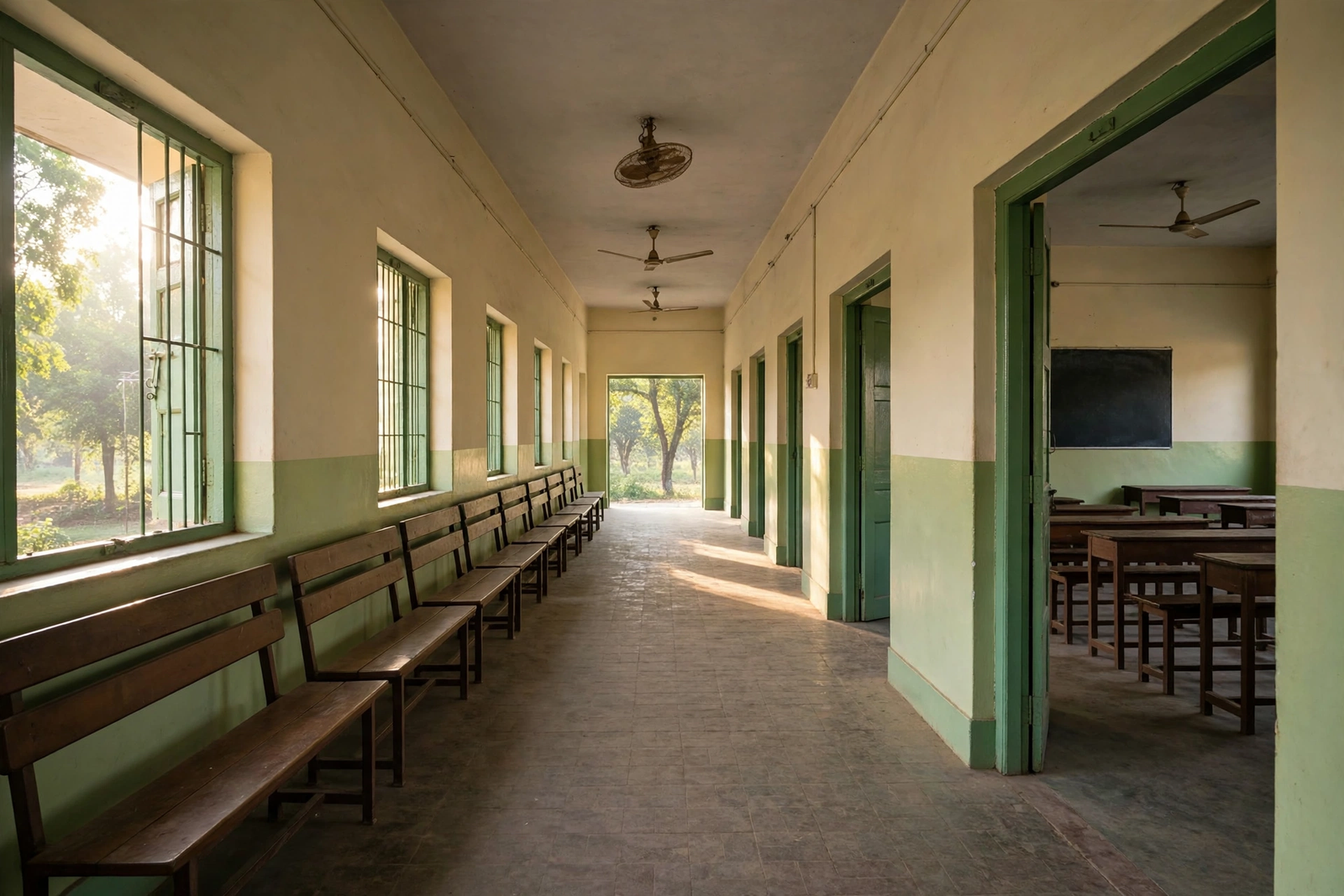
A state-wide drive can easily become everybody’s job and therefore nobody’s, so the proceeding is useful for how it divides the work. The Director, Dr E Naveen Nicolas, set the target, while district education officers carry the monitoring role: ensuring daily capture, no school left in the “attendance not captured” category, and week-by-week improvement in genuine attendance.
Headmasters sit at the centre of the school-level work. They are the ones who must make sure that attendance is recorded each day, that staff on-duty entries are up to date, and that problems with devices or networks are reported and resolved rather than left to accumulate. Teachers carry the daily classroom part of the same job: marking who is present, noticing who has been away, and being part of the follow-up when a student’s absence stretches to five days or more.
Parents and School Management Committees have a named role too: the department has asked for parent and committee meetings to improve regular attendance, so the drive is not a conversation held only inside school offices. A parent who hears from the school in the first week rather than the last can act on a problem early, and a committee discussing attendance as a standing item can spot patterns, such as a transport difficulty affecting one area, that no single classroom would reveal.
Students are not just the subject of the drive: recognition for students, alongside schools and staff, makes attendance a shared achievement, with every fully attended month contributing to a school total.
Facial recognition, in plain terms
The system at the heart of the daily capture is facial recognition, and it is worth explaining in simple language because it is doing a specific job here. In a facial recognition attendance system, a student’s or a staff member’s attendance is recorded when the system recognises their face at the school, rather than by a paper register alone. The department’s instruction is that daily attendance for students and school staff must be captured through this system, and that district officers must work toward zero schools under the “attendance not captured” category.
That zero target is stricter than it first sounds. It does not only ask schools to record attendance. It asks them to record it through the system, every day, so that the department can see a complete picture rather than a patchwork of schools that reported and schools that did not. A school with a faulty device or a network problem cannot meet that standard by keeping a paper list and reporting later, which is why the proceeding also asks officials to resolve facial recognition device and network issues wherever they arise.
Staff attendance has its own housekeeping item in the same proceeding. Officials have been asked to clear pending on-duty entries for staff. An on-duty entry records that a staff member was working away from the school on official duty, rather than absent. If those entries sit uncleared, the attendance picture for staff becomes muddled: people who were working elsewhere can look like people who were missing. Clearing the backlog before and during November keeps the staff side of the month’s figures honest.
Readers who want the original report can find it in the Telangana Today coverage of the announcement, which sets out the department’s proceeding and the directions given to district officers. That report is the source for the details in this article, and it is linked here as the single external source: Telangana Today report on the Special Attendance Month announcement.
Two ways of tracking attendance, side by side
The difference between an ordinary month and a special attendance month is easier to see when the two are placed next to each other. In an ordinary month, attendance is recorded, absences are noticed, and problems are often picked up when a term report is prepared. In a special attendance month, the same recording happens daily through a single system, gaps in recording are treated as a problem in themselves, follow-up has a fixed trigger, and improvement is expected week by week rather than term by term.
| Feature | An ordinary school month | Special Attendance Month |
|---|---|---|
| Daily capture | Attendance recorded as part of routine school work | Daily capture through the facial recognition system, monitored by district officers |
| Schools with no capture | May go unnoticed for a while | Target is zero schools in the “attendance not captured” category |
| Long absence | Often reviewed at term end | Follow-up triggered after five or more consecutive days, through parent contact and home visits |
| Pace of improvement | Judged over a term | Week-on-week improvement expected across November |
| Recognition | Occasional, school by school | Best-performing and most improved schools, students, headmasters, teachers, and staff felicitated |
The table also shows why the department has paired a technology target with a human one: the system can tell an officer which schools have captured attendance, but only a phone call, a home visit, or a meeting with parents can find out why a particular student has been away for a week.
What “genuine” attendance means here
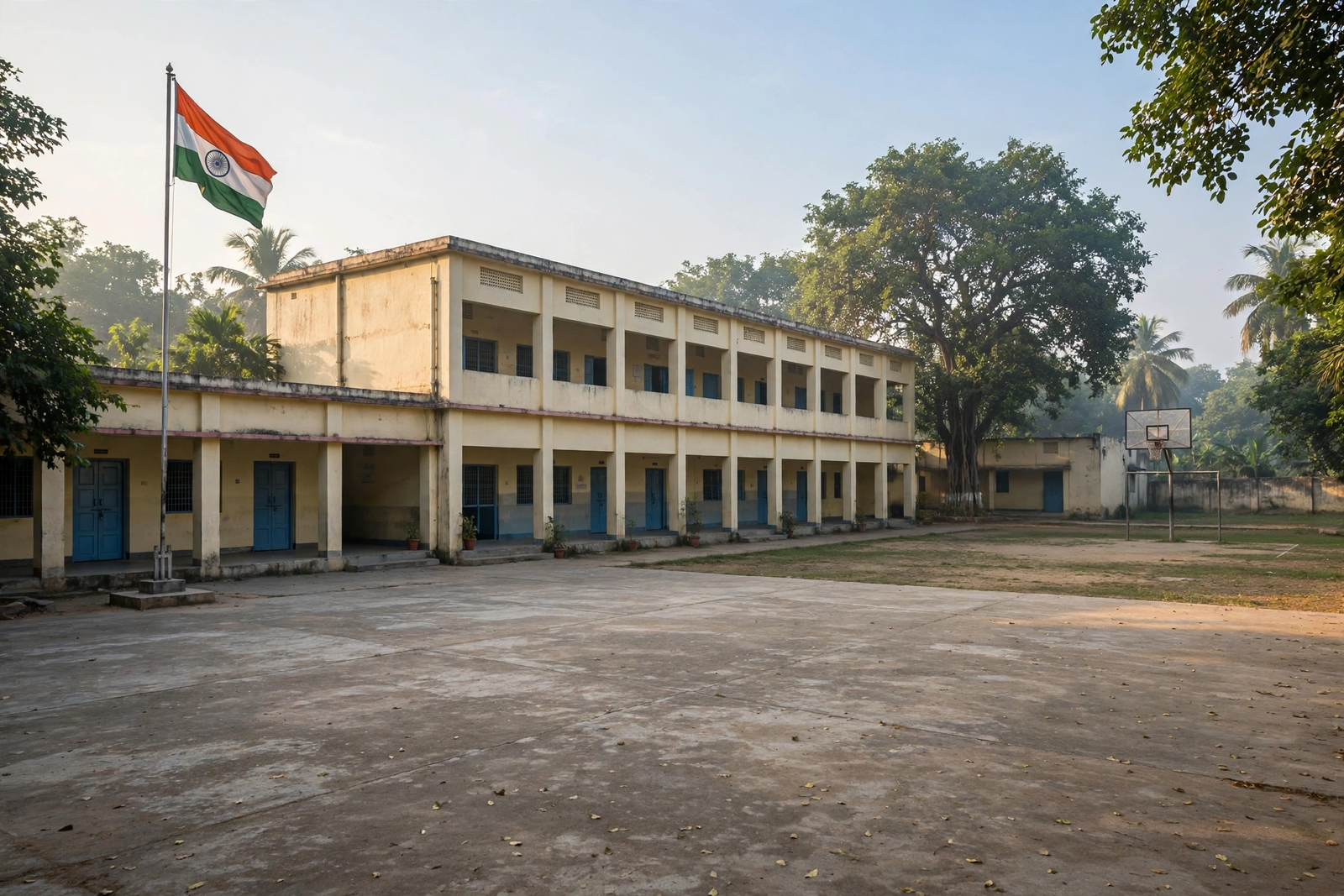
One word in the department’s directions deserves a closer look: genuine. District officers have been asked to strive for the highest possible genuine attendance, aiming for full attendance on working days. Genuine attendance means attendance that is real and correctly recorded: students and staff who are actually present, captured through the proper system, with staff on-duty entries correctly cleared so that the figures reflect reality.
The distinction matters because a drive that only rewarded a high number could encourage shortcuts. A drive that rewards genuine attendance rewards the harder work: making sure devices work, making sure every school captures its figures, clearing the entries that muddy the record, and following up honestly when a student is away. Week-on-week improvement in genuine attendance is therefore a stronger test than a single good week, because it shows that the system behind the number is working, not just that one week went well.
For families, the practical meaning is straightforward: a student’s percentage is days present divided by total school days, multiplied by 100. A student present on 20 out of 20 working days has full attendance for the month, and a student present on 18 out of 20 sits at 90 per cent. A month of full attendance lifts the yearly figure, and a month of missed days pulls it down.
Frequently asked questions
What is Telangana’s Special Attendance Month?
It is a state-wide drive declared by the School Education Department for November, from November 1 to November 30, in which all government schools are directed to work toward full attendance of students and staff on working days, with daily capture through the facial recognition system.
Who issued the directions, and to whom?
The proceeding was issued by the Director of School Education, Dr E Naveen Nicolas, and it instructs district education officers to ensure daily attendance capture, to work toward zero schools in the “attendance not captured” category, and to drive week-on-week improvement in genuine attendance.
What happens when a student is absent for five or more days in a row?
Officials have been asked to identify such students and arrange individual follow-up through contact with parents and home visits where necessary, so that the reason for the absence is understood and addressed during the month rather than at the end of it.
How does the facial recognition system fit into the drive?
Daily attendance for students and staff is to be captured through the facial recognition system, district officers are to monitor that capture, and device and network problems are to be resolved so that no school is left without captured attendance.
Will schools and students be recognised at the end of the month?
Yes. The department has said it will recognise and felicitate the best-performing and most improved schools, students, headmasters, teachers, and other staff, and headmasters who secure full attendance of students and staff throughout the month will be felicitated at the department’s head office in Hyderabad.
How families can follow a student’s month
Parents do not need to wait for the end of November to know how a student’s month is going. The simplest routine is a weekly check: note how many working days the school has had so far in the month, and how many of those days the student was present, then work out the percentage. A student who is present on every working day so far is on track for the month’s target. A student who has missed two days out of ten is at 80 per cent for the month so far, which is a useful early warning even though the month is not over.
If the percentage is slipping, the department’s own plan points to the next step: speak to the school. Parent and committee meetings are part of the drive, and a conversation in the second week of November is far more useful than one in December. Families can ask whether the school’s capture is working, whether any absence was recorded correctly, and what support the school can offer if transport, health, or a family difficulty is behind the absences.
A similar state-level effort in Punjab shows a different way of keeping parents in the loop, with daily messages about attendance so that an absence is noticed on the day it happens. The Punjab Mission Samrath attendance alerts story explains how that system works. Telangana’s approach is different in method but similar in purpose: make attendance visible quickly, so that a small gap does not quietly become a large one.
What to watch when November ends
The most interesting question at the end of November will not be whether a single school reached full attendance, but whether the systems built during the month keep working in December. A month in which every school captures attendance daily, clears staff on-duty entries, and follows up absences after five days leaves behind habits and working devices a later month can use.
Two other things are worth watching: which schools are recognised as most improved, not only best-performing, since improvement awards show which schools started with difficulties and fixed them; and what district officers report about the “attendance not captured” category, since reaching zero would give Telangana a complete daily attendance picture for its government schools.
For now, November’s message is simple: every working day counts, every day is captured, and a week of steady attendance is the building block of a month of full attendance.
Check a student’s percentage at any point in the month with the free attendance percentage calculator on this site: attendance percentage calculator. A related state directive on school attendance rules is covered in the Bihar model schools attendance guidelines story, which shows how another state has set out its own attendance expectations for its schools.