 Skip to main content


A third-year law student misses weeks of classes while interning at a district court, an experience that will teach her more about legal practice than any lecture. When she returns, her college tells her she cannot write her semester exams because her attendance fell short. She faces losing an entire year, not because she failed to learn, but because she failed to sit in a classroom. For thousands of law students across India, this scenario was a real and recurring fear. The Delhi High Court has now ruled that it must end.
In a landmark judgment, the court held that no law college in India can stop a student from writing semester examinations or force a student to repeat a year solely because of low attendance. The court issued directions to all law schools, universities, and the Bar Council of India, placing student welfare at the centre of attendance policy for legal education.
What the Court Decided
The core of the ruling is straightforward: attendance shortage alone can no longer be used as a reason to bar a law student from examinations or to hold the student back academically. Colleges must allow students to write their exams and move to the next year even when attendance is low.
The court did not say attendance is meaningless. Instead, it replaced the harshest consequence with proportionate ones. Colleges may deduct up to 5 percent of marks or 0.33 in CGPA for low attendance, but they may not go beyond that. This creates a clear ceiling: attendance can affect a student’s grades within set limits, but it cannot end a student’s academic year.
The judgment also rebuilt the information flow around attendance. Attendance records must be sent to students every week through online portals or apps, so no student is surprised by a shortfall at semester end. Parents must be informed every month when attendance falls short.
The Case Behind the Ruling: Sushant Rohilla
The judgment grew out of a tragedy that drew national attention. In 2016, Sushant Rohilla, a 21-year-old third-year student at Amity Law School in Delhi, died on August 10. His family said the college had not allowed him to write his exams and had made him repeat the year because of attendance issues. They also said teachers had shamed him in front of his classmates.
The Supreme Court took notice of the matter in 2016 after receiving a letter from his friend. The case then came before the Delhi High Court in 2017, where it expanded into a wider examination of how attendance rules operate in legal education across the country.
Delivering the judgment, Justices Prathiba M Singh and Amit Sharma said that no young life should be lost over attendance rules. That sentence captures the moral centre of the ruling. An administrative requirement, however well intentioned, must never carry consequences so severe that they endanger a student’s wellbeing. The court has now closed the matter after giving clear directions to the Bar Council of India and to law colleges.
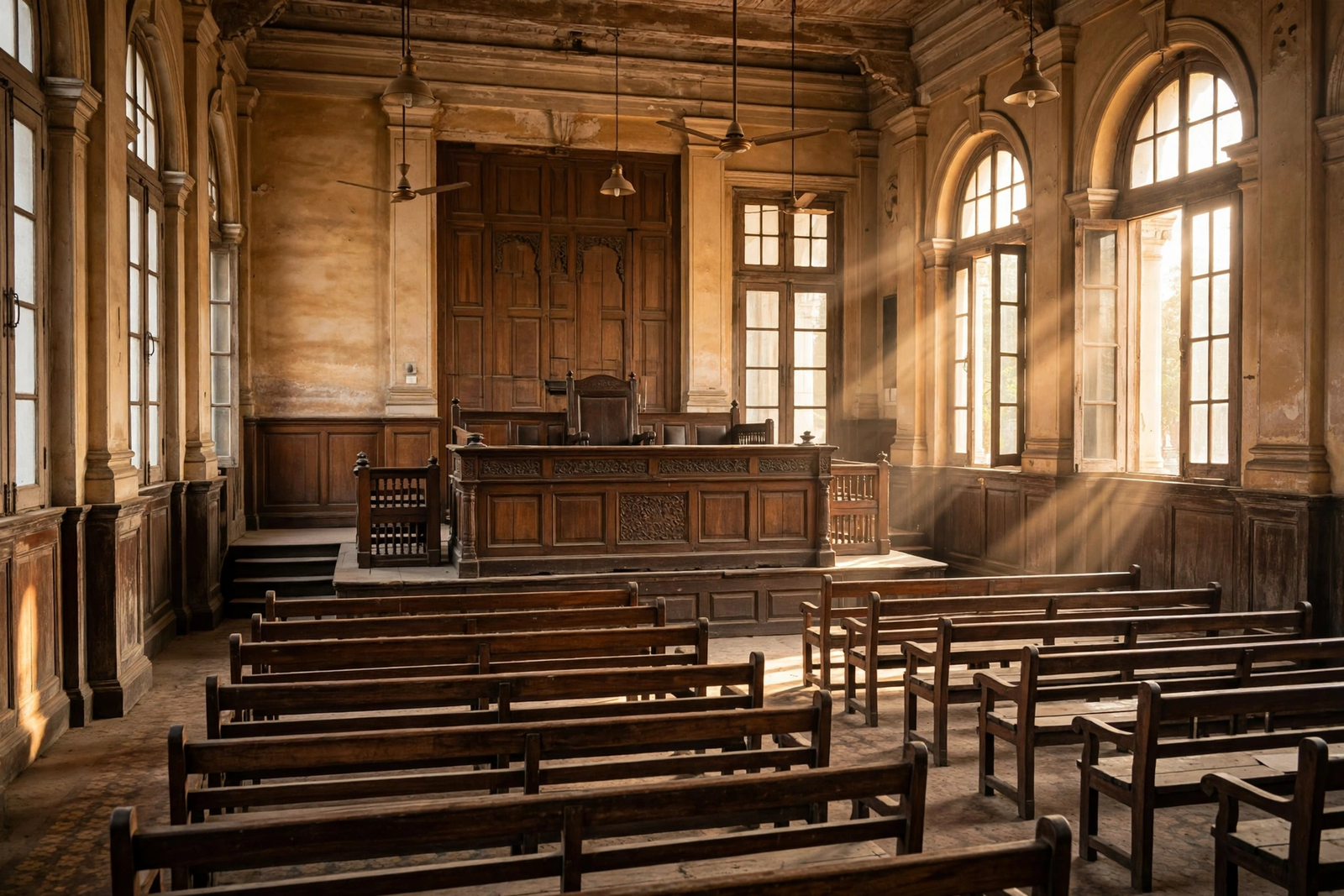
The Court’s Directions to Law Colleges
Beyond the headline ruling, the judgment contains detailed directions that reshape how law colleges must handle attendance. Each direction addresses a specific failure the court identified.
First, the weekly attendance record. Colleges must share attendance data with students every week through online portals or mobile apps. This turns attendance from a mysterious year-end verdict into a visible, running number. A student who can see her percentage each week can act on it, whether by attending more classes or by speaking to the administration early.
Second, the monthly parent alert. When a student’s attendance falls short, parents must be informed every month. This brings families into the picture while there is still time to correct the course, rather than after the damage is done.
Third, the makeup obligation. Colleges must arrange extra classes, in person or online, so students can make up missed hours. This is a significant shift: the burden of recovery no longer falls on the student alone.
Fourth, the grading ceiling. Deductions for low attendance are capped at 5 percent of marks or 0.33 CGPA. Colleges cannot invent harsher academic consequences, and they cannot use attendance as a backdoor to fail students who have otherwise performed.
Students who want to understand how attendance percentages translate into academic standing can use the college attendance guide to see why colleges track these numbers and what the figures mean in practice.
A New Philosophy: Attendance Should Support Learning
One of the most far-reaching parts of the judgment is its statement of principle: attendance should support learning. It reverses how many institutions treated the rule, where attendance had become a compliance metric disconnected from whether the student was actually learning.
The court gave this principle practical shape. It said marks can be given for internships, moot courts, debates, model parliament sessions, court visits, and practical work. In other words, a law student who spends a month interning with a lawyer or arguing a moot court competition is engaged in legal education, even if she is not physically in a classroom. The attendance system should recognise that reality rather than punish it.
The court also directed the Bar Council of India to consult with students, parents, teachers, and the University Grants Commission to revise attendance norms in line with the National Education Policy 2020. The minimum attendance requirement may be reduced to 40 percent, with greater value given to internships and practical training. The BCI must also publish a list of internship options and ensure that students from disadvantaged backgrounds get an equal chance to access them.
This is a profound rethinking of what counts as legal education. The traditional model assumed learning happens in lecture halls. The court’s model recognises that for law, learning also happens in courtrooms, chambers, and competitions. An attendance policy built only around classroom hours was measuring the wrong thing.
Why the Court Rejected Biometric Attendance and CCTV
The judgment also addressed the technology of enforcement. The court said that biometric attendance systems and CCTV cameras in classrooms are impractical and can harm students. This is a notable pushback against a trend in many institutions toward ever-stricter monitoring.
The reasoning connects to the judgment’s wider philosophy. If the goal of attendance is to support learning, then surveillance tools that create fear and resentment work against that goal. A fingerprint scanner at the classroom door measures presence, not engagement. Cameras record bodies in seats, not minds at work. The court effectively said that institutions should invest in making classes worth attending rather than in policing who walks through the door.
For students, this part of the ruling is reassuring. It signals that the highest court in the capital region sees attendance as an educational matter to be handled with proportionality and care, not as a security problem to be solved with hardware.
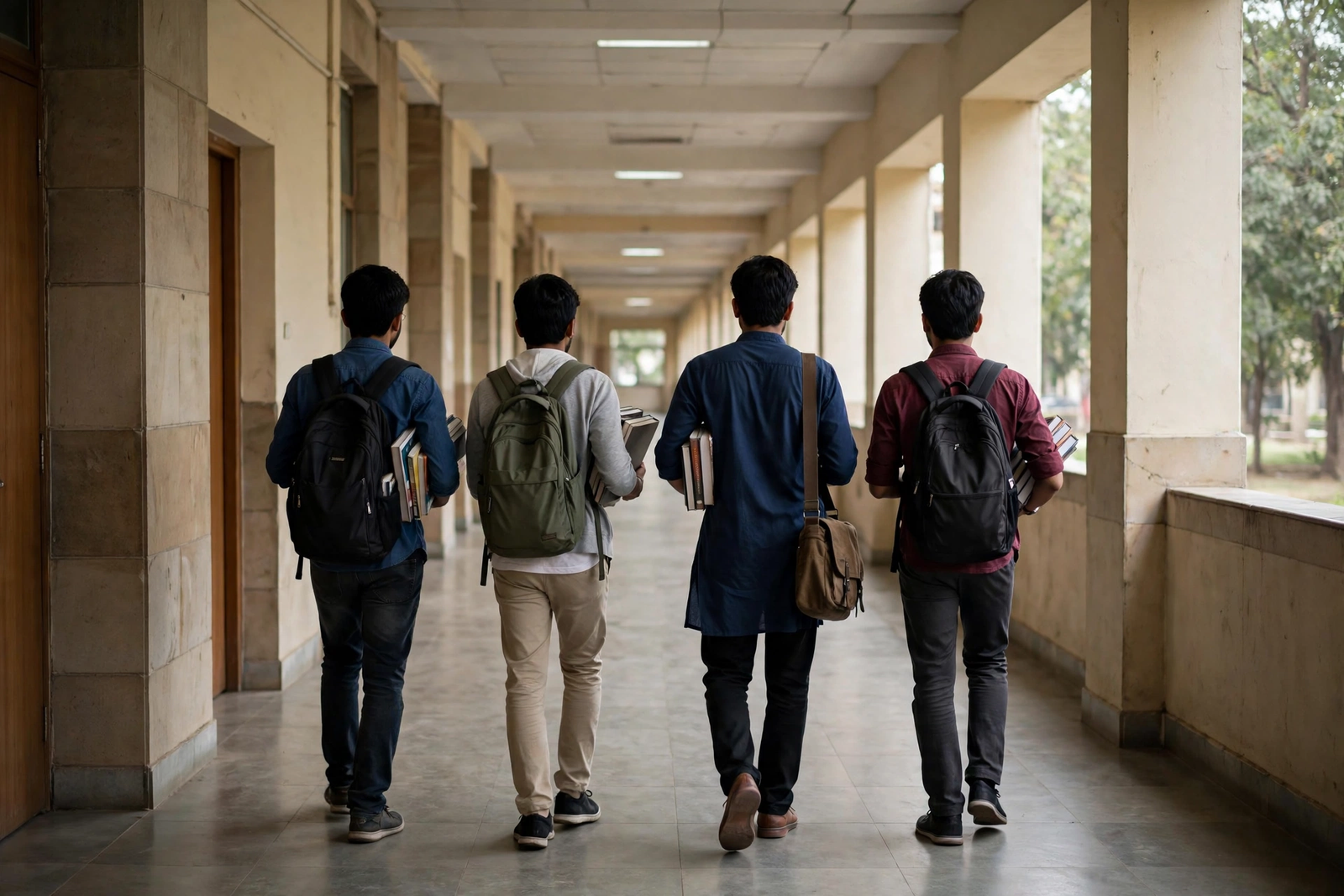
The Mental Health Mandates
The judgment goes beyond attendance mechanics into student welfare. Every law college must set up a grievance committee with more than half of its members being students, giving students a real voice in how complaints are handled. The University Grants Commission must change its rules to make such committees mandatory. All law colleges need full-time counsellors and access to psychiatrists.
These directions respond to a grim backdrop. More than 1.5 lakh students join law courses in India every year, and many face intense stress from strict attendance policies combined with academic pressure. Government data cited in the reporting shows that over 13,000 students die by suicide in India each year.
The grievance committee requirement is particularly important. A committee dominated by students is more likely to hear complaints honestly than one controlled entirely by the administration. For a student facing an attendance dispute, having a forum where fellow students hold the majority can make the difference between being heard and being dismissed.
What the Ruling Means for Law Students in Practice
The judgment changes the legal landscape, but students still need practical habits. The ruling removes the worst consequence of low attendance, but attendance still affects marks within the 5 percent or 0.33 CGPA ceiling. A student who ignores attendance entirely will still see it reflected in her grades.
The weekly attendance record is the student’s most useful new tool. When colleges comply with the direction to share records weekly, students should check the number every week and keep their own parallel record. A personal attendance tracker makes this easy: log each day’s attendance, and the running percentage is always visible. If the college’s number and the student’s number disagree, the student has her own log to raise the question early.
The formula remains the student’s basic instrument:
Attendance percentage = (Classes attended / Total classes held) x 100
A law student in a semester with 90 working days who has attended 60 has an attendance of about 66.7 percent. Under the old approach at many colleges, this number could have meant barred exams. Under the new ruling, it means the student writes the exams, with attendance-related deductions capped at the court’s ceiling. But the student should still aim higher, because every percentage point protects the final grade.
Students should also document the learning they do outside the classroom. Since the court recognised internships, moot courts, and practical work as legitimate educational activity, students should keep certificates, participation records, and supervisor confirmations. If an attendance question ever arises, this documentation shows engagement with legal education in its broader sense.
The BCI’s Task and the February 2026 Review
The judgment places a direct obligation on the Bar Council of India. The BCI must carry out the court’s orders within three months, and the court will review progress in February 2026. This deadline gives the ruling teeth: it is not an advisory opinion but a supervised reform.
The BCI’s consultation process will be the critical next step. The court wants the council to speak with students, parents, teachers, and the UGC before revising the attendance norms. Students and student bodies should treat this as an invitation to participate. The history of the case shows that student voices, from the letter that reached the Supreme Court to the arguments before the High Court, drove the reform. Continued engagement can shape what the new norms look like.
The possible reduction of minimum attendance to 40 percent, with greater weight for internships, would be the most visible outcome. But the quieter reforms may matter more: weekly records, monthly parent alerts, makeup classes, grievance committees with student majorities, and counsellors in every college. Together, these change the daily experience of legal education.
What to Watch Next
The February 2026 review is the date to circle. When the court examines the BCI’s progress, students will learn whether the directions have been translated into real rules or left on paper. Watch for the BCI’s draft of revised attendance norms and for whether the consultation genuinely includes student representatives.
Watch also for how individual colleges respond. Some may comply quickly, publishing weekly attendance data and constituting grievance committees. Others may resist or delay, in which case students will need to know their rights under the judgment. The guide on condonation of attendance shortage explains the formal relief mechanisms that exist alongside the court’s new protections.
The broader significance extends beyond law colleges. The judgment articulates a principle that could influence other professional courses: attendance rules must be proportionate, transparent, and oriented toward learning and welfare rather than exclusion. For now, though, its direct beneficiaries are the 1.5 lakh students who enter India’s law colleges each year, as reported by Shiksha. They can now pursue internships, moot courts, and practical training without the fear that a shortfall in classroom hours will cost them their year.
Frequently Asked Questions
What did the Delhi High Court rule about law student attendance?
The Delhi High Court ruled that no law college in India can stop a student from writing semester examinations or force the student to repeat a year solely because of low attendance. Colleges may deduct up to 5 percent of marks or 0.33 in CGPA for low attendance, but they cannot impose harsher consequences. The court issued these directions to all law schools, universities, and the Bar Council of India.
What was the Sushant Rohilla case about?
Sushant Rohilla was a 21-year-old third-year student at Amity Law School in Delhi who died in August 2016. His family said the college had barred him from writing exams and made him repeat the year over attendance issues, and that teachers had shamed him publicly. The Supreme Court took notice in 2016 after a letter from his friend, and the matter reached the Delhi High Court in 2017, where it grew into a nationwide review of attendance rules in legal education.
Can law colleges still punish students for low attendance?
Colleges can reflect low attendance in grades, but only within strict limits: a maximum deduction of 5 percent of marks or 0.33 CGPA. They cannot bar students from exams or detain them for a year. Colleges must also share attendance records with students weekly, inform parents monthly about shortfalls, and arrange extra classes so students can make up missed hours.
Will the minimum attendance for law students be reduced to 40 percent?
The court directed the Bar Council of India to consult students, parents, teachers, and the UGC on revising attendance norms in line with the National Education Policy 2020, and indicated the minimum could be reduced to 40 percent with greater value given to internships and practical training. The BCI must complete this work within three months, with the court reviewing progress in February 2026, so the exact new figure will emerge from that process.
How can law students protect themselves on attendance now?
Students should check their weekly attendance record as soon as colleges begin sharing it, keep a personal daily log to cross-check the official number, and document internships, moot courts, and practical work with certificates. If attendance falls short, they should speak to the administration early and use the grievance committee, which must have a student majority. The college attendance guide explains how attendance figures affect academic standing in more detail.
Law students who want to keep their attendance percentage visible at all times can use the free attendance calculator at https://attendancepercentagecalc.com/ to track classes attended, compute the running percentage, and plan makeup attendance through the semester.


