Skip to main content


It is 6:40 in the morning, and a group of children is standing at the end of a driveway with their backpacks, watching the road. The bus usually turns the corner by now. It does not come, so a parent checks a phone, then starts the car, because someone has to get these children to school.
That scene played out in district after district in 2026, and it is not a story about one broken-down bus. It is a story about a workforce that is too small for the job it has to do. School districts across the United States are short of bus drivers, and when the driver is missing, the route is missing too — and so, very often, is the student.
At a glance
- A national survey of school districts found that 71 percent experienced at least one operational consequence of driver shortages in the past year, including longer ride times and missed or late pickups.
- In Kentucky, one county closed school for an entire day in September 2026 because two drivers called out and there was nobody to cover their routes.
- In North Carolina, a district reported about 58 active drivers against a goal of about 80, leaving it at least 22 drivers short.
- Research on Michigan’s 50 largest districts found that access to school-provided transport raised attendance and lowered chronic absenteeism, especially for economically disadvantaged students.
- Three in four districts surveyed said transport access affects attendance, yet only one in four actually tracks the connection.
The numbers behind the shortage
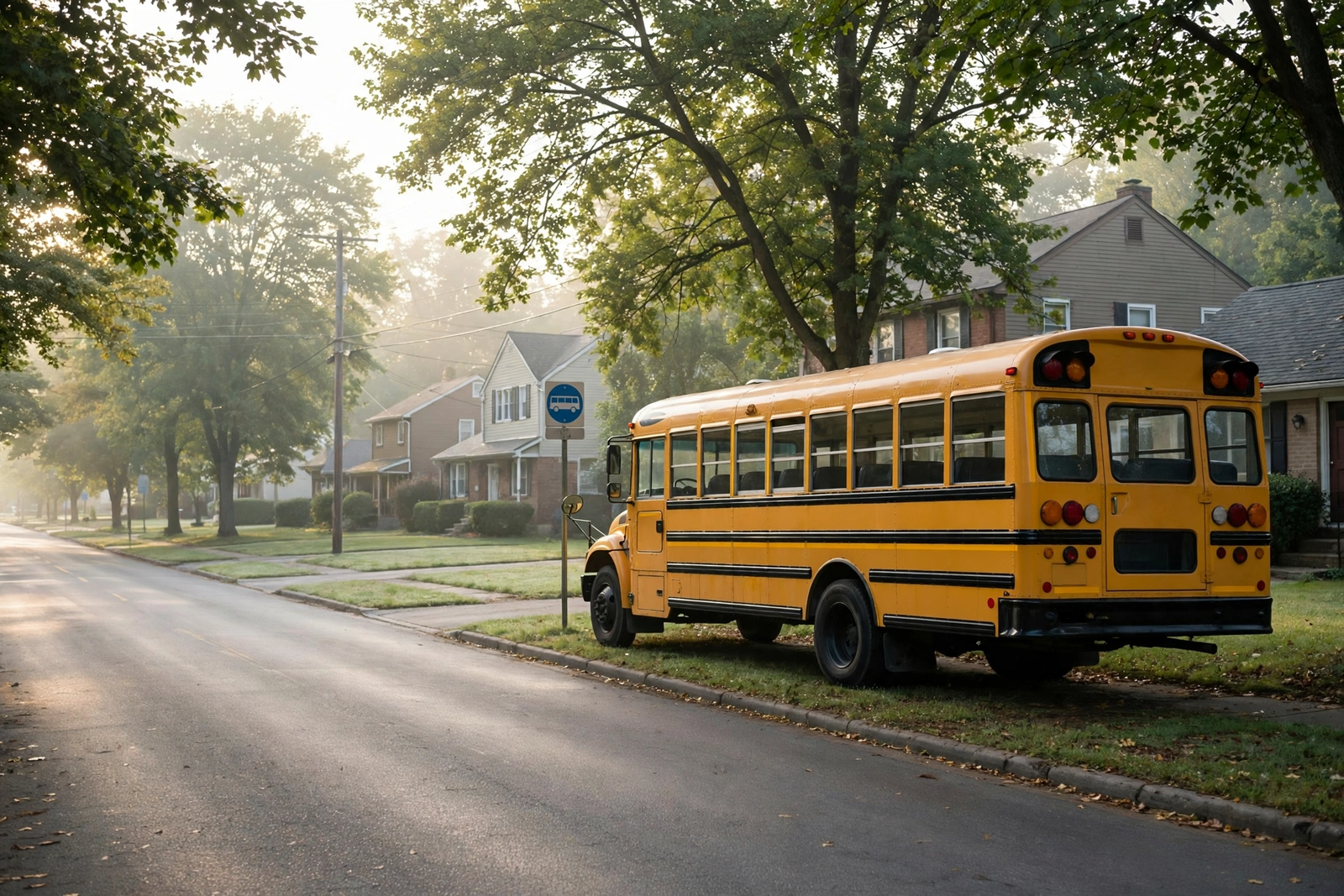
The clearest picture comes from HopSkipDrive’s 2026 State of School Transportation Report, a survey of school districts that asked what driver shortages actually do to a school day. The headline number is 71 percent: that share of districts said they experienced at least one operational consequence of driver shortages in the previous year. A shortage, in other words, is not a rare emergency for most districts. It is a normal operating condition.
The consequences show up in the daily routine. Nearly half of the districts surveyed, 46 percent, reported longer student ride times, as the drivers who are available cover extra ground. Almost four in ten, 39 percent, experienced missed or late pickups. A late pickup can mean a late arrival at school or a missed first lesson. A missed pickup can mean no school at all that day.
The survey also asked districts whether they thought transport affected attendance, and the answers reveal a gap between belief and measurement. Three quarters of respondents, 75 percent, said transportation access affected attendance. Yet only 25 percent said they actively tracked that relationship. Most districts are convinced the link is real, and most of them are not measuring it, which means the true scale of the attendance cost is probably larger than the records show.
Four districts, one problem
The national numbers are striking, but the shortage is lived locally, one route at a time. Four districts in four states show how the same problem takes a different shape in each place.
Trimble County, Kentucky: a whole school day lost
Trimble County is a small district, and small districts feel a shortage first, because there is no spare capacity to absorb it. By the start of the 2026 school year, officials there had already been doubling routes, asking the drivers they had to cover extra ground. On September 18, 2026, two drivers called out, and the department — down to only six or seven drivers for hundreds of students — could not cover the routes. The district closed for the day, and students must make up the missed instructional day later in the school year. Two absences were enough to shut the system down.
Moore County, North Carolina: a long recruitment climb
Moore County Schools illustrates the other end of the problem: a larger district that knows exactly how short it is and is working hard to close the gap. In its August staffing update, the district reported about 58 active drivers against a goal of about 80, leaving it at least 22 drivers short. Vacancies increased the workload on the drivers who remained and made consistent route coverage difficult.
The September 2026 recruitment update showed how slow the climb is. The district had 29 applicants in the pipeline, with 15 still on track through onboarding, including nine who had signed up for a bus class. One fully qualified driver was scheduled to start on September 21. That is progress, but it is progress measured in single drivers against a gap of more than twenty.
Part of the difficulty is the training pipeline itself. The district lost its dependable DMV trainer in May 2026, and without that trainer, classes had to be rescheduled and candidates were lost along the way. Transportation director Jason Nelson put the point plainly: compensation matters for recruitment, but the ability to move candidates through the process matters just as much.
Bullitt County, Kentucky: a warning to families
Bullitt County Public Schools took a different approach: it warned families in advance. In July, the district told parents that routes could be canceled if substitute drivers were unavailable, and that parents would remain responsible for getting their children to school. Absences caused by canceled routes would not be excused.
The warning is honest, and it is also a sign of how thin the margin has become. A district that cannot promise a bus on a given morning has to pass the uncertainty on to families, and families with flexible jobs, a second car, or a relative nearby can absorb it. Families without those options cannot, and for their children a canceled route is simply a missed day.
Lewiston, Maine: decisions before sunrise
Lewiston Public Schools faced the same pressure in the spring. In April, the district canceled multiple bus routes day to day while struggling to fill nearly a dozen driver positions, rotating the drivers it had between routes to cover as much ground as possible. Superintendent Jake Langlais said transportation decisions often began before sunrise, as administrators worked out which routes could run and which could not. It is not one big decision but a hundred small ones, made early, under pressure, with incomplete information.
Why hiring a school bus driver takes so long
One reason the shortage is so hard to fix is that hiring a school bus driver is not like hiring for most jobs. The path from applicant to driver has several stages, and a candidate can fall away at any one of them.
Step one: the application. A person has to want the job in the first place, and the job is a split shift — early morning and mid-afternoon, with a long gap in the middle — which suits some people, such as retirees and parents, and does not suit others. The National School Transportation Association’s executive director, Curt Macysyn, estimated that roughly 20 to 30 percent of applicants ultimately work as bus drivers for a school year. Most applicants, in other words, never become drivers.
Step two: the licence. Driving a school bus requires a commercial driver’s licence with passenger and school bus endorsements, which means written tests, a road test, and a vehicle inspection test. A district needs qualified trainers and examiners to run this process, and as Moore County discovered, losing a trainer can stall the whole pipeline for months.
Step three: the background checks and training. Candidates go through background checks, medical checks, and district training on student management, safety procedures, and the routes themselves. This stage protects students, and it cannot be rushed — but every week in training is a week the route stays uncovered.
Step four: staying. Keeping a driver is a separate challenge from hiring one. Macysyn has said the working environment is high on the list of what keeps drivers, pointing to administrative support, routing systems, training, and the presence of bus monitors. A driver who feels supported stays; a driver who is asked to cover two routes every day, with no monitor and no backup, looks for something else.
Step five: the bench. Even a fully staffed district needs more drivers than it has routes. As Macysyn put it, a 50-route operation needs more than 50 drivers, because drivers get sick, take leave, and retire. A district with exactly enough drivers for its routes is one absence away from a cancellation, and building that substitute pool is the part of the problem that takes the longest to fix.
What the research says about buses and attendance
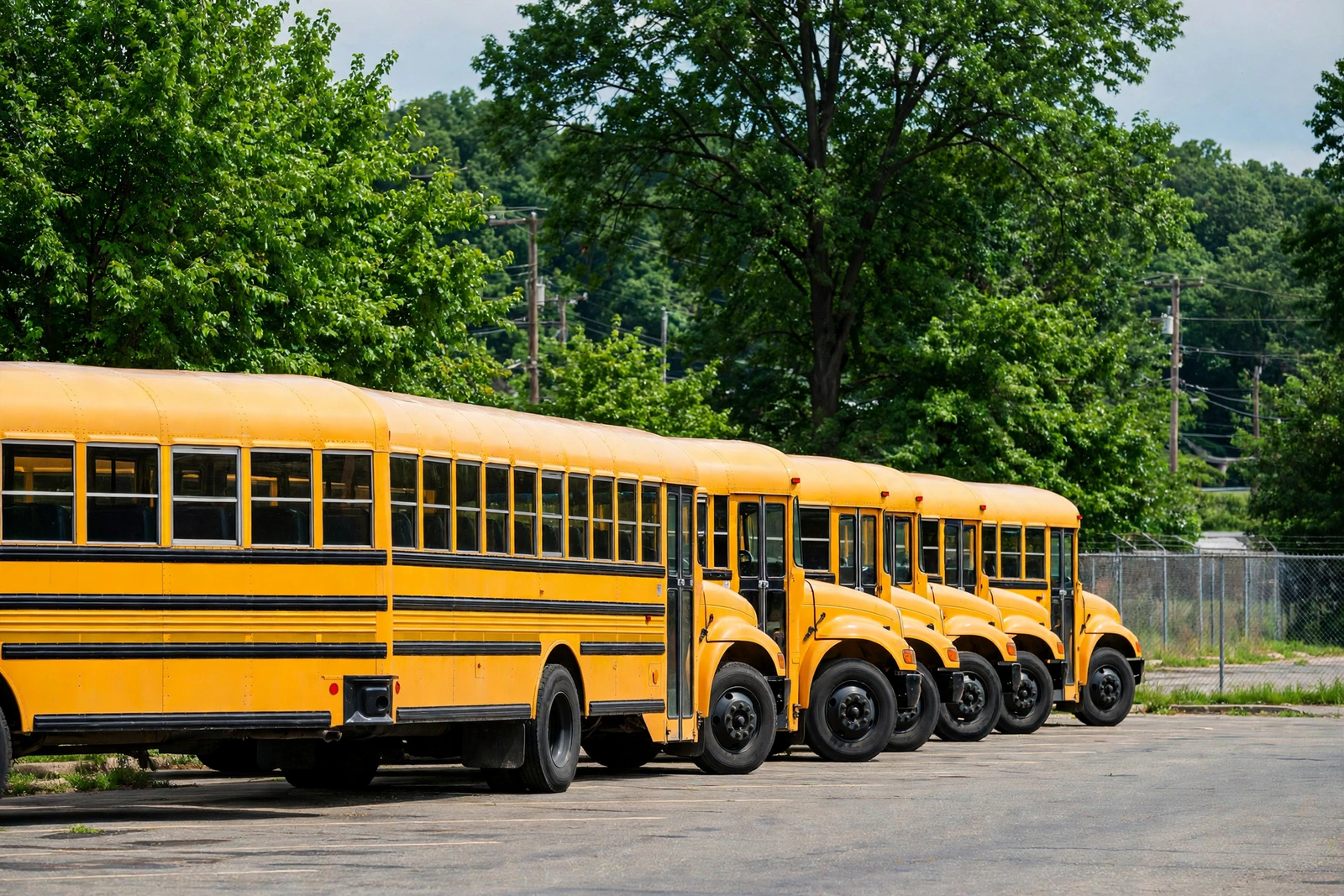
The connection between a bus and a classroom seat is not just common sense. It has been measured. A 2024 study published in Education Finance and Policy looked at Michigan’s 50 largest school districts and found that eligibility for school-provided transportation increased attendance and reduced chronic absenteeism. Among economically disadvantaged students, attendance improved by 0.5 to 1 percentage point, and the probability of chronic absenteeism fell by 2 to 4 percentage points. Those are modest numbers per student, but across a whole district they add up to thousands of days in school.
The study matters because it isolates the effect of the bus itself. It is not about motivation or family attitudes toward school. It is about whether a child has a reliable way to get there. When the bus is there, more children are there. When it is not, fewer are.
The attendance rules themselves add another layer. In many places, a student whose bus is canceled and who cannot get to school is still marked absent, and a pattern of absences can bring a family into contact with attendance officers and truancy procedures, even though the cause was a missing driver rather than a missing student. Readers who want the full account of the districts, the survey, and the research can read the School Transportation News report on driver shortages and student attendance, which also notes the added complexity of transporting students experiencing homelessness and students with disabilities whose individual education plans require transportation. Families facing that situation should know how the rules work where they live, and a plain explanation of whether attendance is compulsory is a useful starting point, along with a clear account of what a truancy officer can and cannot do.
What families can do when the bus does not come
No family can fix a district-wide driver shortage on its own, but there are practical steps that reduce the damage when a route is canceled.
- Sign up for every alert channel the district offers. Districts now announce cancellations by text, email, app notification, and social media, often early in the morning. A family that hears about a cancellation at 6 a.m. has options; a family that finds out at the bus stop does not.
- Build a backup plan before it is needed. Talk to neighbours, relatives, or other parents on the same route about carpooling on days the bus does not run. A shared plan agreed in advance is far easier to use than one improvised at dawn.
- Keep a simple attendance record at home. Note the dates a bus was canceled and whether the school marked the absence as excused or unexcused. If a pattern builds up, that record is the evidence a family needs when speaking to the school.
- Ask the school how canceled-route absences are recorded. Policies differ, and some districts excuse absences caused by their own transport failures while others do not. Knowing the rule in advance avoids a surprise later.
- Raise the issue with the school board, not only the school. Driver recruitment, training capacity, and substitute pools are district-level decisions, and boards respond to parents who show up with specifics: which routes were canceled, how often, and how many school days were lost.
None of these steps replaces the bus. They are what a family does while waiting for the system to catch up.
Frequently asked questions
Why is there a school bus driver shortage?
There are fewer applicants than there are seats to fill, and only about 20 to 30 percent of applicants end up driving for a school year, according to the National School Transportation Association. The job is a split shift, it requires a commercial licence with special endorsements, and the training pipeline is slow — losing a single trainer can stall hiring for months.
How does a bus driver shortage affect student attendance?
A canceled route can mean a late arrival, a missed first lesson, or no school at all that day, especially for families without a car or a flexible work schedule. Research on Michigan’s 50 largest districts found that access to school-provided transport raised attendance and lowered chronic absenteeism, with the strongest effects for economically disadvantaged students.
Can a school mark a student absent if the bus is canceled?
It depends on the district. Some districts excuse absences caused by their own canceled routes, while others do not — one Kentucky district warned families that absences from canceled routes would not be excused. Families should ask their school directly how canceled-route absences are recorded.
How many districts are affected by driver shortages?
In HopSkipDrive’s 2026 State of School Transportation Report, 71 percent of surveyed districts reported at least one consequence of driver shortages in the previous year. Nearly half reported longer ride times, and almost four in ten reported missed or late pickups.
What is being done to fix the shortage?
Districts are recruiting harder, running more training classes, and trying to build a bench of substitute drivers so that one absence does not cancel a route. Industry leaders say retention matters as much as recruitment: administrative support, good routing, training, and bus monitors all help keep the drivers a district already has.
A bus is an attendance policy
The school bus is easy to overlook in a discussion about attendance, because it feels like infrastructure rather than education. But for a large share of students, the bus is the difference between being present and being absent, and a driver shortage is, in practice, an attendance problem wearing a transport uniform.
That is also why the numbers deserve attention. When 71 percent of districts feel the consequences, and only a quarter of them track the attendance cost, the problem is bigger than the cancellations that make the news. Behind every canceled route is a child who did not get to school. The fix is slow — licences, trainers, benches of substitutes — but it starts with seeing the bus for what it is: not just a ride, but a part of how a child gets to learn.
Families who want to keep track of where they stand can work out the numbers for themselves. A simple guide to calculating average attendance shows how a school measures the pattern, and the attendance percentage calculator turns days present and days absent into the percentage schools actually look at.