
Camden City School District has set itself one of the clearest attendance targets in the country: cut its chronic absenteeism rate in half by June 2027. The starting point shows why the goal is so ambitious. In the 2025-26 school year, the district’s chronic absenteeism rate was 49 percent, with 2,310 students chronically absent. Roughly one student in two missed at least a tenth of the school year.
The plan was laid out on October 27, 2026, at an advisory Board of Education meeting by Michael Coleman, the district’s executive director of family and community engagement, and reported by TAPinto. It rests on a three-tier programme that runs from classroom conversations for every student to frequent home visits and counseling for the most persistent cases. The story was reported by Hoodline on November 9, 2026, and it is worth reading in full because the district’s problem is unusually severe, and its response is unusually direct.
The baseline: 49 percent
Chronic absenteeism counts a student as chronically absent when they miss at least 10 percent of the school days in a given year. In a typical 180-day school year, that works out to 18 days. Camden’s district also flags students who miss at least two days a month and works with them directly, catching problems before they reach the 10 percent line.
The district’s current rate of 49 percent means that about half of its students crossed that line in 2025-26. The number of students involved, 2,310, gives the rate a human scale: this is not a small group at the margins of the district. It is half the student body, and any plan that moves the rate has to reach thousands of families, not dozens.
Halving the rate by June 2027 would mean bringing it down to roughly the mid-20s. That would still be well above the New Jersey statewide rate of 14.9 percent recorded in 2023-24, but it would be a transformation for the district. The target is dated, measurable and public, which makes it easy to judge: by June 2027, the district will either have moved the number or it will not have.
A short history of the problem

Camden’s attendance problem did not arrive with the pandemic, but the pandemic made it far worse, and the recovery since then has been slow. The recent history reads as a timeline of a district struggling to get students back into classrooms.
Before the pandemic, the district’s chronic absenteeism rate sat well below its current level. The Philadelphia Inquirer reported the district’s rate at 46.9 percent in 2023-24, a figure 13 percentage points higher than before the pandemic. During the pandemic itself, the picture was worse still: NJ Spotlight News reported in 2024 that the share of chronically absent Camden students had reached about 60 percent during the pandemic, with daily average attendance falling to 75 percent.
Since then, there has been partial recovery. That same 2024 report put the chronically absent share at about 35 percent, down from the pandemic peak, and said daily average attendance had risen from 75 percent to close to 90 percent. The district’s own figure for 2025-26, 49 percent, sits above that 35 percent estimate, though the two figures come from different sources and different years, so they should be read as a range rather than a single trend line. What they agree on is the scale: Camden’s rate has stayed far above the state average for years.
The pattern extends beyond the district’s own schools. Camden Prep, a charter school in the city, recorded a chronic absenteeism rate of 50 percent in 2023-24, compared with 32 percent before the pandemic. KIPP Cooper Norcross rose from 21.1 percent in 2018-19 to 45.5 percent in 2023-24, a jump of 24.4 percentage points. The problem is city-wide, touching more than one school and more than one operator.
Camden against the state: the gap in numbers
The gap between Camden and the rest of New Jersey is the starkest part of the story. The New Jersey State Policy Lab, which tracks the state’s figures, reported a statewide chronic absenteeism rate of 10.6 percent in 2018-19, before the pandemic. That rate climbed to 18.1 percent in 2021-22, then eased to 14.9 percent by 2023-24. At that point, New Jersey’s rate trailed only Alabama’s 14.8 percent among the states in the lab’s comparison, meaning New Jersey had one of the lowest rates in the country.
Camden has not shared in that recovery. The table below sets the district’s reported figures against the statewide rate for the same years, using the figures reported by the State Policy Lab, the Philadelphia Inquirer and NJ Spotlight News.
| School year | New Jersey statewide | Camden City School District |
|---|---|---|
| 2018-19 | 10.6% | Not reported in these sources |
| 2021-22 | 18.1% | About 60% during the pandemic period |
| 2023-24 | 14.9% | 46.9% |
| 2025-26 | Not yet reported | 49% |
The lab’s analysis of 2023-24 found that districts in Camden and Paterson had chronic absenteeism rates above 35 percent, while districts such as Millburn Township and Westfield stayed below 8 percent. The same analysis found that in 2021-22, rates in New Jersey were higher among historically underserved groups, including Black, Hispanic, economically disadvantaged, multilingual learner and disabled students. Camden is a district where many of those groups make up a large share of enrolment, so the statewide pattern lands heavily there.
The three-tier plan
The district’s answer is a three-tier programme, described by Coleman at the October 27 board meeting. The tiers escalate with the severity of the problem, so that every student gets some attention and the students missing the most school get the most intensive support.
Tier one: conversations for every student
The first tier covers all students. It is built on attendance discussions, clear expectations and family communication. The idea is that attendance is talked about before it becomes a problem, so that families know what the district expects and where to turn when something gets in the way. This tier costs the least per student and reaches the widest group, and it sets the tone for the tiers above it.
Tier two: mentoring and the first home visits
The second tier adds more intensive support for students who are starting to miss school regularly. It includes mentoring from a student’s favourite teacher, a deliberate choice that uses an existing relationship rather than assigning a stranger. It can also include home visits, bringing the school to the family rather than waiting for the family to come to the school. The district’s approach here is personal: the mentor is someone the student already trusts, and the visit is framed as support rather than enforcement.
Tier three: frequent visits and counseling
The third tier is reserved for the most persistent cases. It means frequent home visits and counseling, with the district working directly and repeatedly with families whose children are missing large amounts of school. This is the most resource-heavy part of the plan, and it is also the part that will matter most for the headline number, because the students in this tier account for a large share of all missed days.
The full account of the plan, including the board presentation and the district’s own description of its goals, is set out in Hoodline’s report on Camden’s attendance push.
Why students are missing school
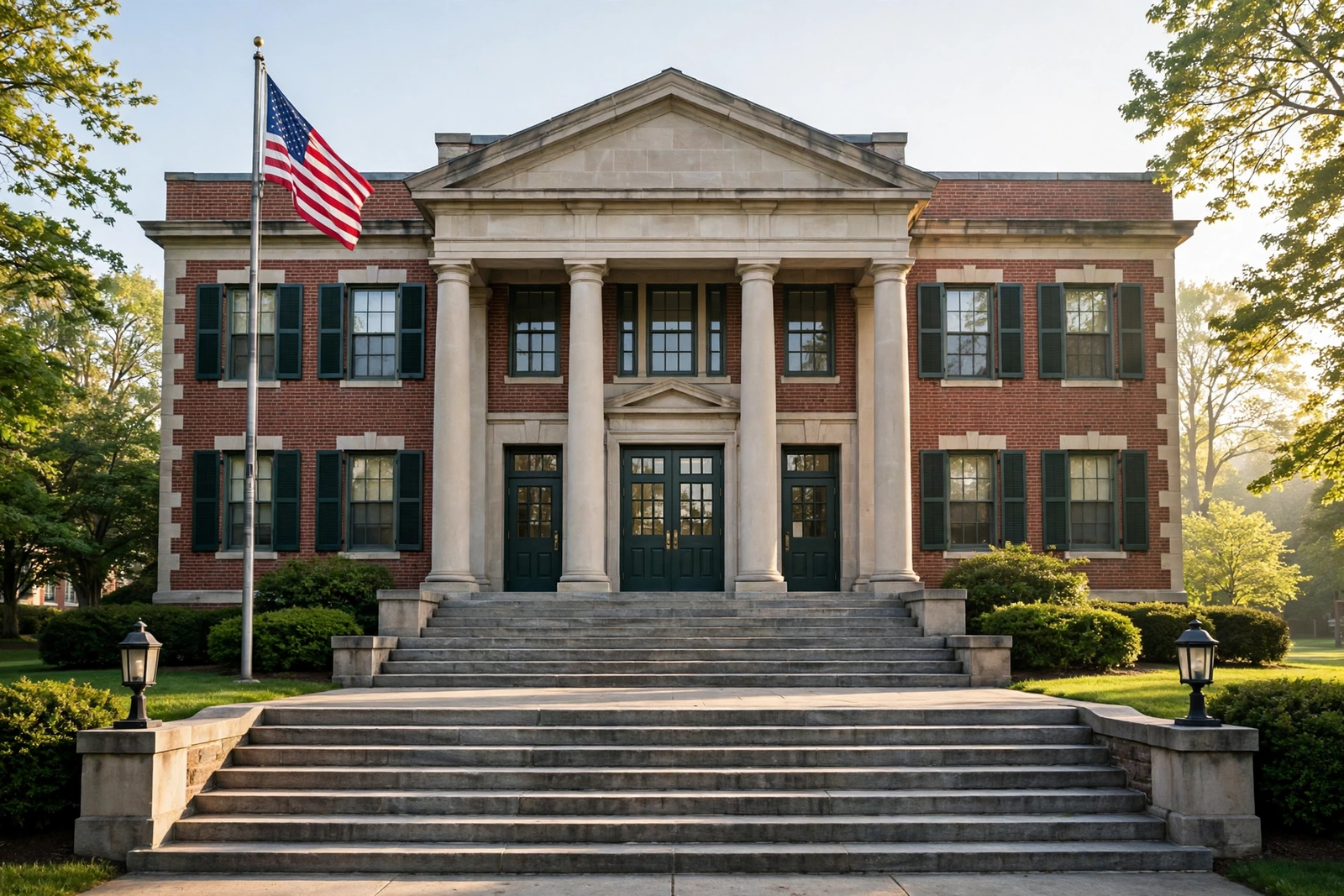
Coleman told the board that the district needs to break down the barriers to school attendance, and he named six of them: transportation, health and wellness, housing, academic stress, bullying, and disconnection from school. Each one points to a different kind of help, which is why the district’s plan leans on family engagement staff rather than on a single rule.
Transportation troubles can mean a missed bus or a route that does not work for a family’s schedule. Housing instability can mean a family moving mid-year, sometimes out of the neighbourhood their child’s school serves. Health problems can keep a student home for days at a time, and the district’s guidance asks families to seek support when health, transportation, housing or another challenge is affecting attendance. Bullying and academic stress can make a student reluctant to go to school at all, and disconnection from school, the sense that nobody at school would notice an absence, can turn an occasional missed day into a habit.
Coleman stressed that most students’ absences are not their fault, and that attendance is not simply about compliance. It is about understanding what is keeping children from getting to school in the first place. That framing matters because it shapes how the home visits work: a visit that starts by asking what the family needs is more likely to help than one that starts by counting the days missed.
The district’s stated direction for 2026-27 lists attendance, a sense of belonging and barrier removal among its priorities, with the goal that students attend regularly, feel safe and supported, and receive timely help when barriers arise. The three-tier plan is the operational form of that direction.
What will show whether it is working
Eight months is a short window for a problem this large, and the district’s plan will be judged on whether the rate moves, not on whether the programme sounds right. Three things are worth watching between now and June 2027.
The first is the rate itself. The district has published its baseline, 49 percent, and its target, half that. Any interim figures the district releases will show whether the decline is under way. A plan that works should show movement well before the deadline, because the tiers are designed to act on students who are missing school now.
The second is the tier-three caseload. Frequent home visits and counseling are the most demanding part of the plan, and they depend on having enough staff to sustain them. If the district can keep visiting the families of its most absent students month after month, the structure is holding. If visits fade after the first term, the plan’s hardest part will not have been tested.
The third is the comparison with nearby schools. Camden Prep and KIPP Cooper Norcross face the same city-wide pressures, and their figures will show whether the problem is easing across the city or only inside the district’s own schools. A city-wide improvement would suggest the barriers themselves are easing. An improvement limited to the district would still count, but it would say more about the district’s programme than about the city.
There is also a wider context that favours the plan. Chronic absenteeism has been falling across 21 states, and districts elsewhere are reporting gains from the same kinds of measures Camden is adopting. In Franklin County, Massachusetts, for example, schools that paired family liaison roles with regular data review saw chronic absenteeism fall sharply in a single year. Camden is starting from a much higher rate, so the same methods would need to work harder there, but the direction of travel nationally is on the district’s side.
What families in Camden can do
District plans move slowly, but a family’s own attendance picture changes week by week, and the most useful thing a parent or student can do is track the percentage rather than just counting missed days. A student who has missed 9 days out of 90 has missed 10 percent of the school year and sits exactly on the chronic-absence threshold, even though 9 days may not sound alarming on its own. Learning how to calculate the absenteeism rate turns a vague worry about missed days into a clear number that can be followed across a term.
That number is also the number to take into any conversation with the school. Camden’s district flags students who miss at least two days a month, so a family that tracks its own percentage will usually spot a problem at the same time the school does, or earlier. If transport, health or housing is the reason behind the missed days, the district’s own guidance is to seek support, and its family engagement team is the place to start. The three-tier plan only works if families and schools are talking to each other, and the earliest conversation is the one a family starts itself.
What is Camden’s chronic absenteeism rate?
The district’s rate for the 2025-26 school year was 49 percent, with 2,310 students chronically absent. The district has set a goal of cutting that rate in half by June 2027.
What counts as chronic absenteeism?
A student counts as chronically absent when they miss at least 10 percent of the school days in a given year, which works out to 18 days in a typical 180-day school year. Camden’s district also flags students who miss at least two days a month and works with them directly.
What is Camden’s three-tier attendance plan?
Tier one covers attendance discussions, expectations and family communication for all students. Tier two adds mentoring from a student’s favourite teacher and possible home visits. Tier three, for the most persistent cases, means frequent home visits and counseling.
Why are so many Camden students missing school?
The district points to transportation troubles, housing instability, health problems, bullying, academic stress and disconnection from school. Its family engagement director has stressed that most students’ absences are not their fault, and that the work is about understanding what keeps children from getting to school.
How does Camden compare with New Jersey as a whole?
New Jersey’s statewide chronic absenteeism rate was 14.9 percent in 2023-24, one of the lowest in the country. Camden’s rate was 46.9 percent that year, and 49 percent in 2025-26. Districts such as Millburn Township and Westfield stayed below 8 percent in 2023-24.
Camden’s goal is unusually public and unusually measurable: halve a 49 percent chronic absenteeism rate by June 2027, using home visits, mentoring and family outreach to remove the barriers that keep students out of class. Whether the district gets there will be visible in the numbers it has already promised to move. Families who want to follow their own student’s progress in the meantime can use the free attendance percentage calculator to track attendance across the term and spot a problem while there is still time to act.