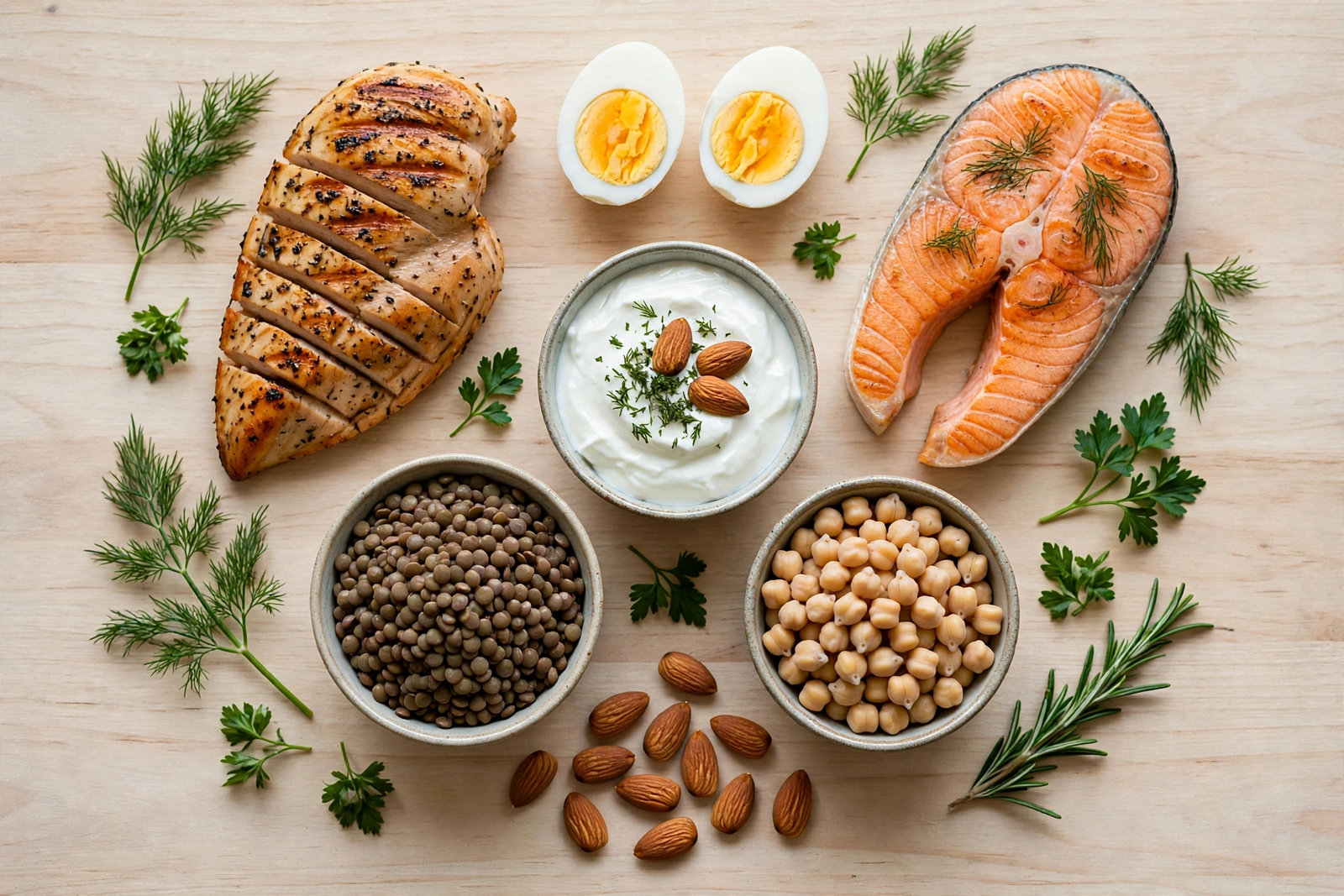
Most people have lived the same small mystery at the dinner table. Lunch was generous, the plate was cleared, and yet within an hour the hand drifts back toward the kitchen for something extra. The usual explanation is weak willpower, or a sweet tooth, or a meal that simply was not filling enough. Nutrition research offers a different explanation. The body may not be chasing calories at all. It may be chasing protein, and when a meal is short on protein, appetite keeps going until that target is met, even if it means eating far more energy than planned.
That is the core of the protein leverage hypothesis, a scientific idea that has moved from insect laboratories to human feeding trials and population studies over the past two decades. A new research explainer from News-Medical gathers the evidence in one place, from the hormones that signal fullness to the liver signal that nudges the brain toward protein-rich foods. This article walks through what the hypothesis says, the experiments that tested it, where the evidence is strong, and where it still thins out.
The idea in one paragraph
The target: The body appears to regulate protein intake toward a set target, much as it regulates water or sleep. When protein falls short, appetite stays switched on.
The dilution: Modern diets, especially those heavy in ultra-processed foods, often deliver plenty of energy from fats and carbohydrates while supplying relatively little protein. Protein becomes diluted in the overall mix.
The overshoot: To reach the protein target on a diluted diet, a person may need to eat more food in total, and that extra food brings extra calories with it.
The catch: The effect is partial, not absolute. It varies with the food on offer and the person eating it. The hypothesis describes one contributor to overeating, not the whole story of obesity.
From insects to humans: a short history
The protein leverage hypothesis did not arrive as a single discovery. It grew in stages, and the timeline matters, because each stage tested the idea in a different kind of creature before it reached humans.
2003 — the first clue. Early analyses of how animals balance macronutrients suggested that protein intake is regulated more tightly than intake of fat or carbohydrate. The pattern showed up across species, from insects to primates.
2005 — the hypothesis gets a name. Researchers formally proposed that this protein-first appetite could help explain modern obesity. The logic was simple: if protein is diluted in the food supply, people eat more total energy while trying to meet their protein needs.
2017 — the population link. A study of eating patterns in the United States connected ultra-processed food intake with lower protein density and higher energy intake, the exact pattern the hypothesis predicts at population scale.
2023 — the synthesis. Raubenheimer and Simpson, the researchers behind the original idea, published a major synthesis in Philosophical Transactions of the Royal Society B, pulling together evidence from feeding experiments, animal studies, and population data into a single framework.
2025 — the quality question. A paper on dietary protein quality added a further layer, examining how well the body can digest and use the protein in different foods.
Two decades of work, then, and the idea has survived contact with real data. It has also been narrowed and qualified at every step, which is exactly what good science looks like.
The 15-to-10 experiment
The cleanest test of the hypothesis comes from controlled feeding trials, where researchers decide exactly what volunteers eat and measure exactly what happens next. One trial, described in the News-Medical explainer, makes the mechanism easy to picture.
Researchers reduced the protein share of volunteers’ diets from 15 percent of energy to 10 percent, keeping the food available and the setting controlled. The result was striking: total energy intake rose by 12 percent over four days. People ate more, not because anyone told them to, and not because the food changed in any other way, but because the protein share had fallen.
There is an important wrinkle. Other experiments found that at very low protein concentrations, intake did not keep rising. The compensation has limits. Short experiments like these also test immediate feeding responses, not long-term weight change. A four-day rise in eating is a signal, not a verdict on what happens over four years.
Still, the pattern is consistent with the hypothesis in its strongest form: modest protein dilution leads to measurable overeating, within days, under controlled conditions. Readers who want the full technical detail, including the cited papers, can find it in the News-Medical research explainer on the protein leverage hypothesis.
Three body signals that do the work
A hypothesis needs a mechanism, and protein leverage has three, working at different levels of the body.
The fullness hormones
Protein-rich meals stimulate appetite-suppressing gut hormones, including glucagon-like peptide-1, known as GLP-1, cholecystokinin, and peptide YY, while reducing ghrelin, the hormone associated with hunger. Together these signals help explain why a protein-rich meal tends to feel more satisfying than an equal-calorie meal built mostly from processed starch. The hormone response supports the idea, though on its own it does not prove the leverage mechanism.
The cost of burning protein
Protein metabolism is energetically expensive. Diet-induced thermogenesis, the energy the body spends processing food, accounts for 20 to 30 percent of the energy derived from protein, compared with about 5 to 10 percent from carbohydrates. In other words, the body spends a meaningful share of protein’s energy just handling it, which contributes to protein’s effect on overall energy balance.
FGF21, the liver’s protein messenger
Fibroblast growth factor 21, or FGF21, is a hormone produced mainly by the liver that links dietary protein restriction to changes in macronutrient preference. When protein runs low, the liver releases more FGF21, which acts in the brain to promote protein-seeking behaviour. Mice lacking FGF21 or its brain signalling fail to show normal compensatory protein-seeking responses. Human evidence points in the same direction, but the animal evidence is strongest here, and researchers are careful to say so.
A low-protein day versus a protein-steady day

The table below translates the trial pattern into an everyday picture. It is illustrative, built on the proportions from the feeding experiments, not a prescription for any individual.
| Low-protein day | Protein-steady day | |
|---|---|---|
| Protein share of energy | Around 10 percent | Around 15 percent |
| What the plate looks like | Mostly processed starches and fats, little protein at each meal | Protein present at each meal, alongside vegetables and whole foods |
| Appetite after eating | Hunger returns sooner, second helpings feel tempting | Fullness lasts longer between meals |
| What the trial predicts | Total energy intake drifts upward, by roughly a tenth in the short term | Intake stays closer to the body’s actual needs |
| The catch | At very low protein the effect levels off, and other factors take over | Protein alone does not fix an otherwise unbalanced diet |
The point of the comparison is not that every low-protein meal causes overeating. It is that protein share is a lever on appetite, and when the lever moves, intake tends to move with it.
What 9,042 adults showed
Controlled trials are persuasive, but they involve small groups in artificial settings. Population data asks whether the same pattern shows up in ordinary life. A cross-sectional analysis of 9,042 adults in the United States offers one answer.
Across increasing quintiles of ultra-processed food consumption, dietary protein density fell from 18.2 percent to 13.3 percent of energy. Total energy intake rose across the same range, while absolute protein intake stayed relatively stable. That is the signature of leverage: as protein thins out in the diet, people eat more overall, and still end up with roughly the same amount of protein.
The limits matter here too. The study used dietary recalls, which depend on memory and honest reporting, and its observational design cannot prove cause and effect. People who eat more ultra-processed food differ from other people in many ways beyond protein, and any of those differences could contribute. The population data is consistent with the hypothesis, not proof of it.
Protein quality matters too
Not all protein is equal, and the hypothesis is about more than grams. Protein quality depends on the essential amino acids a food provides and how well the body can digest and use them.
Animal and dairy proteins generally provide high amounts of essential amino acids and are readily digestible, though digestion rates differ. Casein, for example, forms a gel in the stomach and is absorbed more slowly than whey. Some plant proteins contain lower proportions of particular essential amino acids, such as lysine in cereals or sulphur-containing amino acids in legumes. Combining foods with complementary amino acid profiles, such as legumes and cereals, can improve the overall supply.
Food preparation and processing also affect digestibility, with effects varying by food and method. What muscle studies alone cannot show is how long a food keeps a person full, or whether it changes what they eat later. Only studies that directly measure appetite and eating behaviour can answer those questions.
Who should be careful
The protein leverage story is not a green light to pile on protein without thought. The research itself draws careful boundaries.
People with chronic kidney disease need separate assessment. A systematic review and meta-analysis of 28 trials found no adverse effect of higher protein intake on changes in kidney filtration rate in adults without kidney disease, although some comparisons after the intervention showed higher filtration rates. Trial durations ranged from four days to two years, and the authors note that the evidence does not settle questions about lifelong safety.
Older adults face a different issue. Research on biological ageing describes anabolic resistance, a diminished capacity to stimulate muscle protein synthesis in response to protein intake or exercise. Ageing, physical inactivity, inflammation, and metabolic disease may all contribute. Older adults can experience blunted muscle-building responses to standard protein doses and may need larger doses to achieve responses comparable to those of younger adults.
There is also a newer, untested idea in the literature: chronic psychological and physiological stress may impair how well the gut digests protein, potentially reducing absorbed protein regardless of diet composition. The researcher behind this suggestion presents it as a hypothesis requiring experimental testing. The paper does not demonstrate that this mechanism causes compensatory eating or obesity in humans.
During weight loss, higher-protein diets have been shown to support weight management and help preserve lean body mass, though the studied interventions differ in protein content, energy restriction, and follow-up duration. Longer trials are still needed to clarify sustained effectiveness and safety.
Putting it on your plate
What does all of this mean for an ordinary day of eating? The research points to a few steady principles rather than a rigid plan.
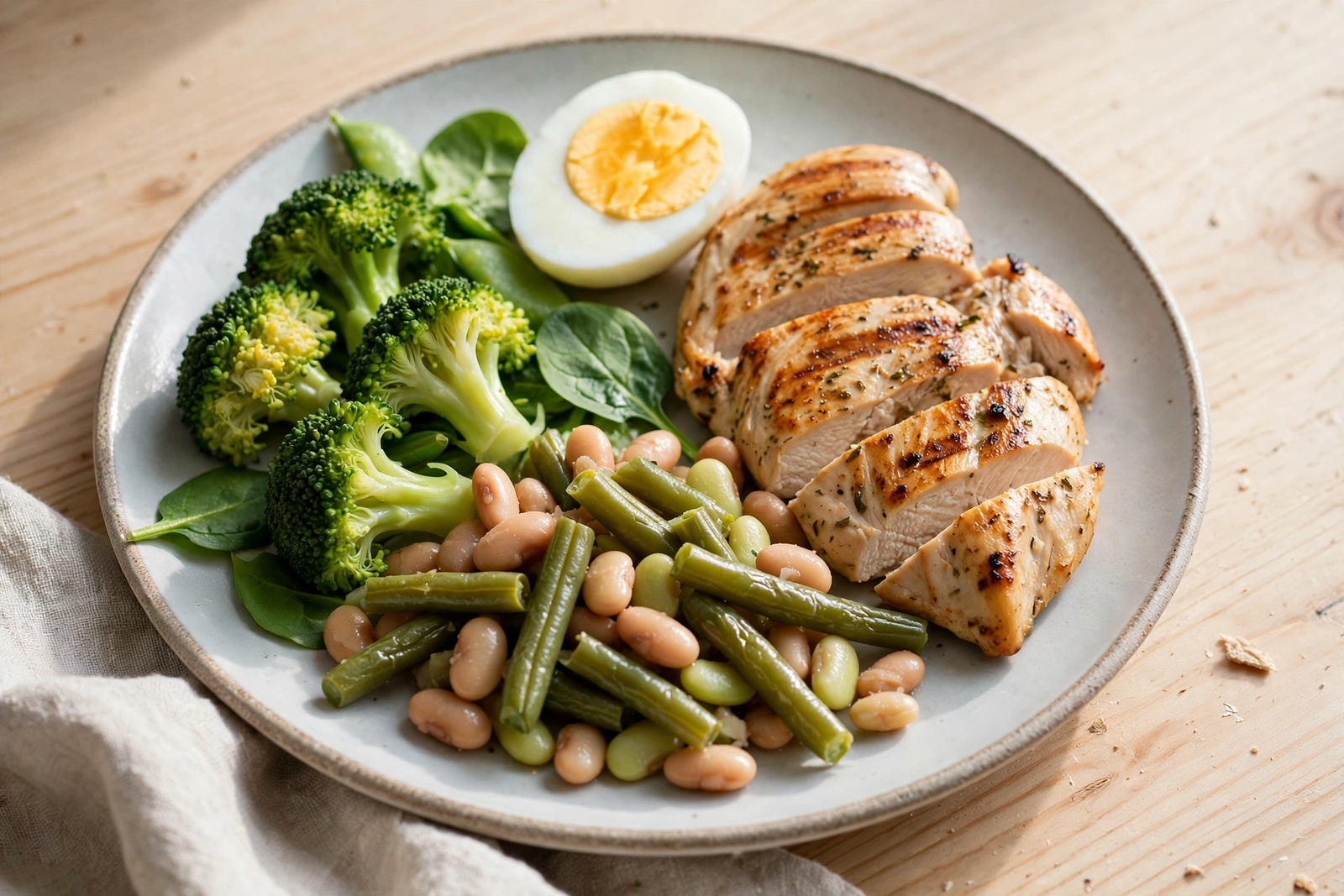
First, think in terms of protein density across the whole day, not a single meal. A day built mostly from processed starches, sugary drinks, and fried snacks can deliver plenty of energy while leaving protein thin. Adding a protein source to each meal, whether animal or plant, raises the density of the whole day.
Second, pair plant proteins thoughtfully. Legumes with cereal grains cover each other’s amino acid gaps, and that combination has sustained whole food cultures for centuries. Readers who eat mostly plant-based can find the same logic explored in the recent comparison of vegan and Mediterranean eating patterns for weight loss.
Third, remember that adding protein is not the same as adding food. Simply piling extra protein foods on top of an unchanged diet raises total energy intake. The idea is to shift the balance of the plate, not to add a second plate. How much protein a person needs depends on age, activity, body size, and health, and the numbers change with all of those factors.
Finally, keep the whole picture in view. Protein leverage is one influence among many. Fibre, energy density, palatability, sleep, stress, and habit all shape how much a person eats. Anyone curious about how their own daily energy needs stack up can estimate them with a TDEE calculator, which turns age, activity, and body measurements into a daily calorie estimate. For readers interested in how protein needs shift with age, the recent review of protein intake and ageing covers the muscle and longevity evidence in detail.
Frequently asked questions
What is the protein leverage hypothesis in simple terms?
The protein leverage hypothesis says the body regulates protein intake more tightly than fat or carbohydrate intake. When protein makes up a smaller share of the diet, appetite stays active until the protein target is met, which can lead to eating more total calories.
Does eating more protein automatically cause weight loss?
No. Higher-protein diets have supported weight management and lean mass preservation in studied interventions, but outcomes depend on total energy intake and on sticking with the eating pattern. Protein is a tool for managing appetite, not a guarantee of weight loss.
How much protein dilution is enough to trigger overeating?
In one controlled trial, cutting protein from 15 percent to 10 percent of energy raised total energy intake by 12 percent over four days. At very low protein levels, other experiments found no further increase, so the effect has limits and varies between people.
Do plant proteins work the same way as animal proteins?
Plant proteins can meet protein needs, but some are lower in particular essential amino acids, such as lysine in cereals. Combining complementary plant foods, like legumes and grains, improves the overall amino acid supply. Digestibility also varies with the food and how it is prepared.
Is a high-protein diet safe for everyone?
A meta-analysis of 28 trials found no adverse effect on kidney filtration in adults without kidney disease, but the evidence does not cover lifelong safety, and people with chronic kidney disease need separate medical assessment. Older adults and people with health conditions should discuss protein targets with a clinician.
The bottom line
The protein leverage hypothesis offers a clear, testable explanation for a familiar experience: meals that are light on protein leave appetite unsatisfied, and the body keeps eating until the protein target is reached. Feeding trials support it, population data is consistent with it, and the hormone and liver signalling behind it is increasingly well mapped. At the same time, the researchers behind the idea are the first to say it is partial. Protein dilution is one contributor to excess energy intake, not the sole explanation for obesity, and separating its effect from fibre, palatability, energy density, and habit remains genuinely hard in everyday diets.
For anyone planning meals, the practical message is modest and useful. Keep protein present at each meal, mind the balance of the whole day rather than a single dish, and remember that the goal is a steadier appetite, not a larger plate. To see what that balance means in calorie terms for your own body, try the free TDEE calculator and use the result as a starting point for the day.