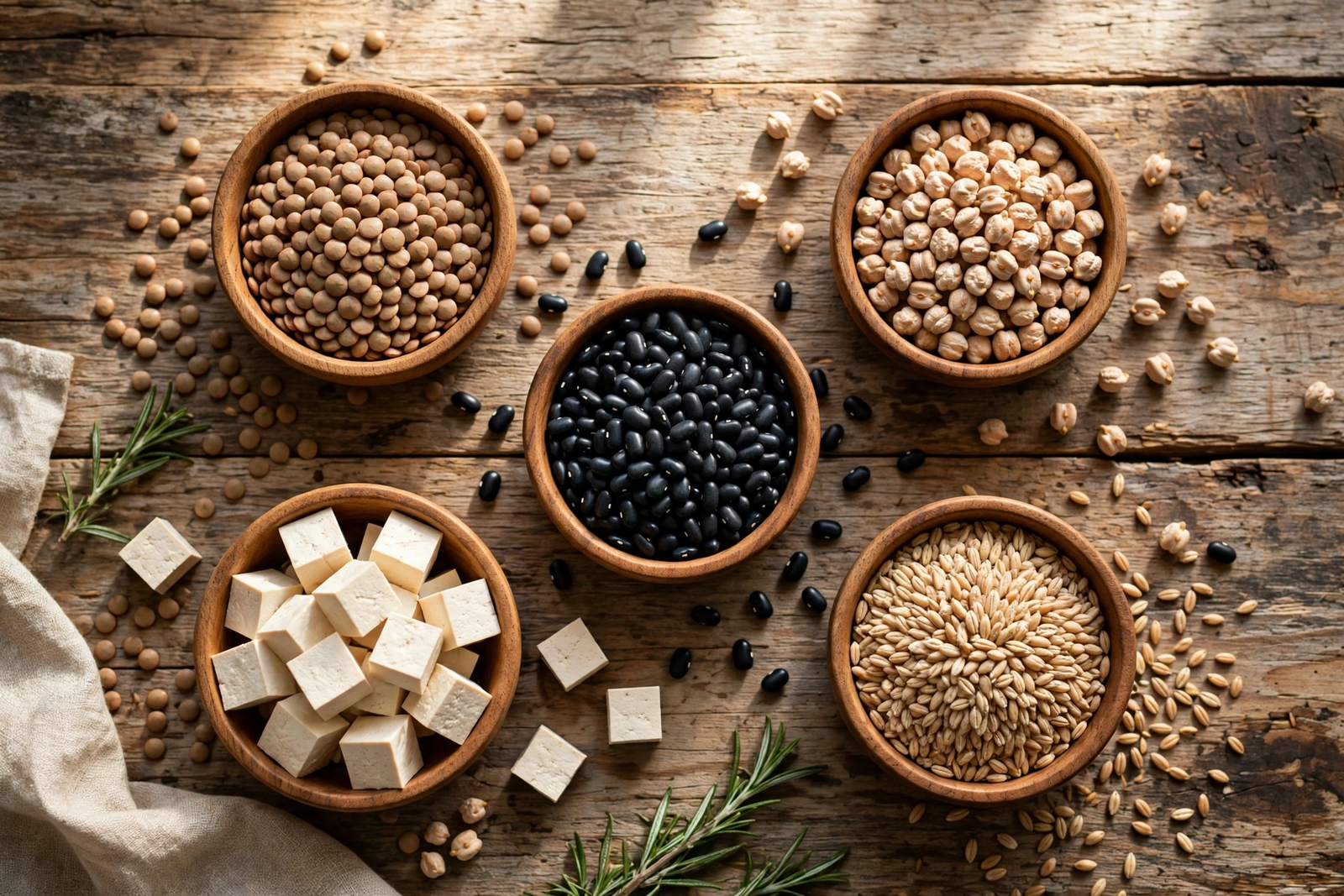
Two of the most talked-about ways of eating were put head to head in the same group of people, and only one of them moved the scales. A new analysis of a clinical trial compared a low-fat vegan diet with a Mediterranean diet in 62 adults carrying extra weight. The vegan phase produced weight loss, while the Mediterranean phase did not.
The study, published in October in BMJ Nutrition, Prevention and Health, asked a different question than most diet comparisons. Instead of asking which diet people should follow, it asked whether the source of protein matters as much as the amount. The participants ate less protein overall on the vegan diet, yet they lost weight. On the Mediterranean diet they ate more protein, yet their weight stayed broadly the same.
Key points at a glance
- A secondary analysis of a randomized crossover trial followed 62 adults with overweight through 16 weeks on a low-fat vegan diet and 16 weeks on a Mediterranean diet, with a four-week break in between.
- On the low-fat vegan diet, participants lost an average of around 13 pounds, or 6 kilograms. On the Mediterranean diet, there was no significant change in body weight.
- Total protein intake fell from 80 grams a day to 46 grams a day on the vegan diet, with animal protein dropping by 47.7 grams while plant protein rose by 14.4 grams.
- On the Mediterranean diet, protein intake stayed close to 73 grams a day, and neither animal nor plant protein changed in a significant way.
- Reductions in four amino acids — isoleucine, lysine, methionine, and tyrosine — were linked with greater weight loss, though the researchers say this link is not yet proven to be a direct cause.
- Independent experts stress that the trial was small and short, and that the Mediterranean diet still showed strengths of its own.
How the trial was run, step by step
The design of the trial is one of its strongest features, and it is worth understanding before judging the result. The work was a secondary analysis of a randomized crossover trial, a design in which the same people try each diet in turn, so each participant effectively acts as their own comparison.
First, 62 adults with overweight were randomly assigned to start on one of the two diets. Random assignment matters because it stops the more motivated or healthier volunteers from clustering in one group and tilting the outcome.
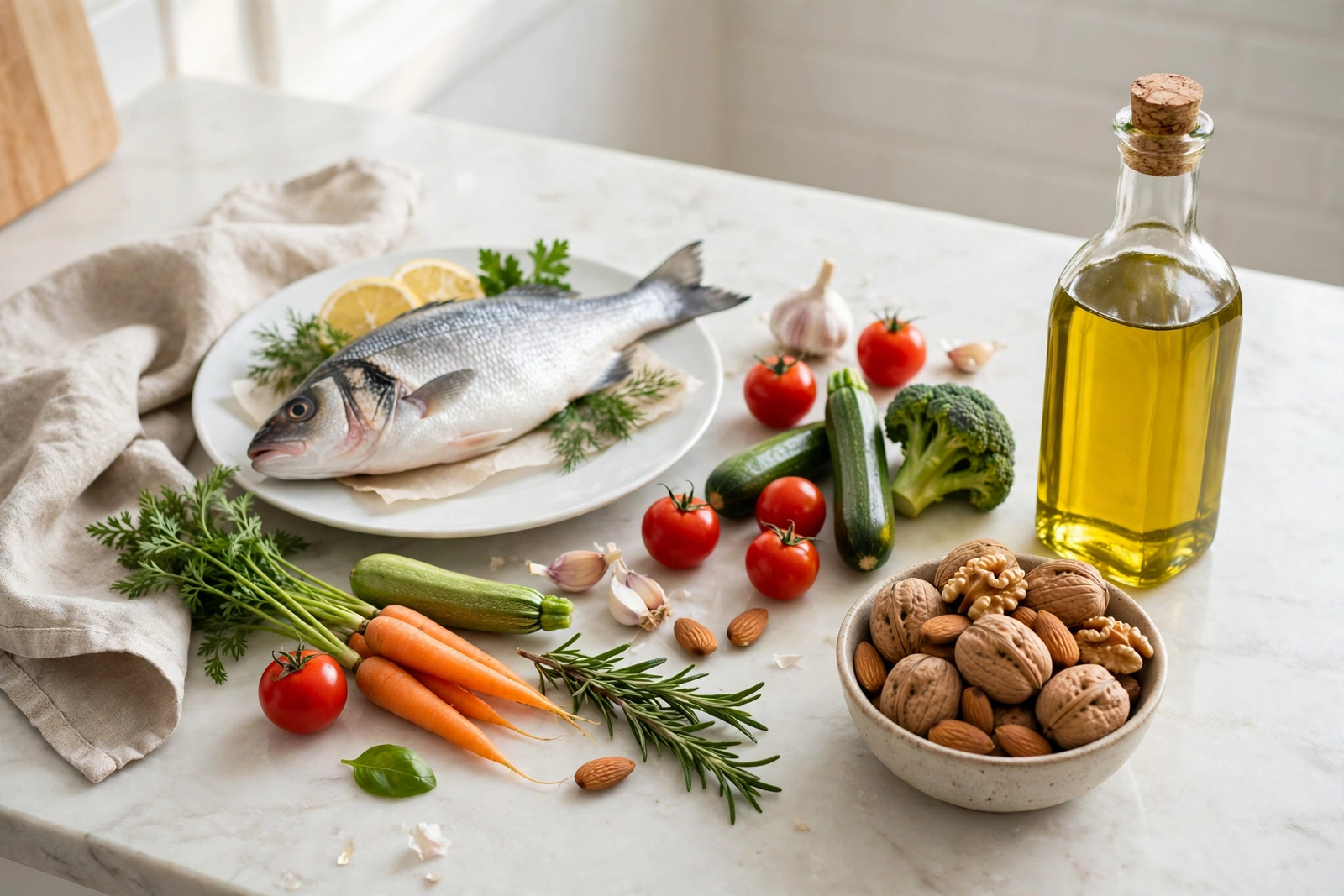
Second, the first diet phase lasted 16 weeks. One group followed a low-fat vegan diet built from fruits, vegetables, grains, and legumes, with no animal products, no added fats, and no cooking oils, at a target mix of around 75 percent carbohydrate, 15 percent protein, and 10 percent fat. The other group followed a Mediterranean diet based on the PREDIMED protocol, with daily vegetables and fruit, legumes, fish, and nuts several times a week, 50 grams of extra virgin olive oil a day, and lean white meat allowed.
Third, a four-week washout period followed, during which participants followed neither diet in particular, so the effects of the first diet could fade before the second began. Then the participants switched: those who had eaten vegan now followed the Mediterranean diet, and vice versa, again for 16 weeks.
Fourth, throughout the trial, what people actually ate was tracked with three-day food records evaluated by registered dietitians.
Because the same 62 people tried both diets, the explanation must lie in the diets, not in who the people were.
The headline result: weight fell on one diet only
On the low-fat vegan diet, participants lost an average of around 13 pounds, or 6 kilograms, over 16 weeks. On the Mediterranean diet, the same participants saw no significant change in body weight.
The protein figures make the contrast sharper still. At the start of the trial, participants were eating around 80 grams of total protein a day. On the vegan diet, that fell to 46 grams a day, a total drop of 33.3 grams a day, made up of a 47.7-gram fall in animal protein partly offset by a 14.4-gram rise in plant protein. On the Mediterranean diet, total protein stayed at around 73 grams a day, with animal protein moving only slightly, from about 42 grams to about 39 grams, and plant protein providing around 34 grams.
The researchers’ reading is narrower: replacing animal protein with plant protein, as part of a low-fat vegan diet, was associated with weight loss in adults with overweight.
The word associated does real work in that sentence. The researchers are clear that they cannot confirm whether the change in protein alone led to the weight loss. The vegan diet also changed the amount of dietary fat, the amount of carbohydrate, and the calorie density of the food on the plate. The study points at the protein source as a candidate explanation, not as a proven cause.
Why the protein source may matter
The most detailed part of the analysis concerns amino acids, the building blocks that make up protein. Animal protein contains more essential amino acids than plant protein, and certain amino acids have been linked in earlier research with weight gain. The researchers looked at whether the fall in those amino acids during the vegan phase lined up with the weight that came off.
A reduction in four amino acids — isoleucine, lysine, methionine, and tyrosine — was associated with greater weight loss. Bariatric surgeon Mir Ali, one of the independent experts who reviewed the findings, described the link as mechanistically fascinating, while adding that the general public should not try to micromanage individual amino acids, since that is impractical.
The senior study author, Hana Kahleova, put the same idea in plain terms when the results were released, saying that the source of protein matters, and that shifting the balance toward beans, lentils, tofu, and whole grains, and away from meat, dairy, and eggs, gave participants a metabolic and a weight benefit they did not get by simply eating more vegetables on a Mediterranean-style diet.
There is also a simpler mechanism that runs alongside the amino acid story, and the experts do not hide it. Plant foods are generally lower in calories for the same volume of food than animal protein, and the fiber in vegetables and grains increases satiety, the feeling of fullness after eating. A low-fat vegan diet also removes added fats and cooking oils, which are dense in calories for their weight.
What the Mediterranean diet did do

It would be a mistake to read this study as a verdict against the Mediterranean diet, and the experts who reviewed it say so directly. The Mediterranean diet led to no significant weight change in this trial, but weight was not the only thing being measured, and the diet showed strengths of its own.
One of those strengths concerns blood fats. The Mediterranean diet lowered triglycerides more than the vegan diet did, which is why board-certified internist Yoshua Quinones said the Mediterranean diet may be the better option for people with high triglycerides or metabolic syndrome.
A second strength concerns muscle. The Mediterranean phase kept protein intake steady at around 73 grams a day, while the vegan phase cut it by a third. For older adults, that difference matters. Quinones pointed to sarcopenia, the progressive loss of skeletal muscle mass, strength, and physical function with age, and said that keeping protein intake steady through fish, dairy, and legumes may help protect muscle better than a drop of 33 grams a day.
Quinones was also blunt about what the trial does not show. In his words, the data do not show that a vegan diet is generally better for weight loss than a Mediterranean diet. The result belongs to that setting; extending it into a general ranking would go beyond the evidence.
What the experts caution
Both independent experts stressed the design strengths of the trial and its limits in the same breath. Ali called the data strong because they come from a randomized clinical crossover trial, which he described as the gold standard in nutritional intervention, strengthened by objective tracking through three-day food records evaluated by registered dietitians. Then he added the limit that matters most: because the dietary shifts happened at the same time, this is not a true comparison of animal versus plant protein, and further studies are needed.
Quinones made a similar point from a different angle. The weight loss itself, he said, is moderately reliable, at least over the short term in motivated adults with overweight. The idea that the protein shift caused it, though, is hypothesis-generating at best. Testing that claim properly would need controlled feeding trials that match calories and fiber while varying only the amount and source of protein. Until such a trial exists, the protein-source explanation remains a well-supported hypothesis, not a settled fact.
Two qualifiers matter: the effect was seen over 16 weeks, and the cause has not been pinned down.
What this means for everyday eating
For a person who usually eats meat and is wondering whether a switch could help with weight, the experts’ advice is practical rather than dramatic. Quinones said a person who eats meat can realistically switch to a vegan diet for weight loss, at least in the short term, if they get structured support. His starting point is simple: make legumes the base, keep the food whole, limit added oils and refined grains, fried foods, sweets, and processed vegan products, and add an exercise routine, especially strength training.
Ali recommended a gradual, structured transition rather than an overnight change, and a crowding-out approach: add plant-based meals a few days a week rather than focusing only on restriction. Familiar foods can be replaced with plant-based alternatives, such as lentil or bean-based chilis, tofu scrambles, and plant milks, and attention should be paid to micronutrients, particularly vitamin B12, and to eating enough volume to avoid energy deficits and burnout.
None of this is a prescription. Any lasting change in eating habits sits on top of a basic question: how much energy does a person’s day actually require? Readers who want that background can start with a plain explanation of what TDEE is, which sets out total daily energy expenditure in everyday terms, and a guide to TDEE versus BMR explains how the daily total differs from the smaller basal figure.
The full account of the trial, including the researchers’ comments and the experts’ cautions, is set out in the Medical News Today report on the vegan and Mediterranean diet study, which is the source for the figures and quotations in this article.
The limits, stated plainly
Every study has limits, and a secondary analysis of a small trial has more than most.
First, the size. Sixty-two participants is small. Small studies can produce striking results by chance, and they cannot detect rare problems or small differences. A trial of this size can show that something happened in this group, but it cannot show how reliably it would happen in a larger population.
Second, the duration. Sixteen weeks on each diet is long enough to see weight change, but it is not long enough to show whether the benefit lasts, whether people can sustain a low-fat vegan diet for years, or whether any longer-term effects emerge.
Third, the design answers one question and leaves another open. Because the vegan diet changed protein source, protein amount, fat, carbohydrate, and calorie density all at once, the trial cannot say which of those changes did the work. The amino acid link is suggestive, and it fits with earlier research, but the researchers state plainly that they cannot confirm a direct relationship between reduced amino acids and increased weight loss.
Fourth, the population. The participants were adults with overweight who volunteered for a structured trial, with dietitian-reviewed food records and regular contact with researchers. The results speak most directly to motivated adults with overweight in the short term.
Fifth, the comparison itself. The Mediterranean diet in this trial followed a set protocol, and the vegan diet was a specific low-fat version built from whole plant foods. The study compares two set eating plans, not two entire traditions of eating.
In short: in this trial, a low-fat vegan diet led to weight loss where a Mediterranean diet did not, and the protein source is a plausible part of the explanation, not yet proven.
Frequently asked questions
Did the vegan diet really beat the Mediterranean diet for weight loss?
In this trial, yes, on the measure of weight change. Participants lost an average of around 13 pounds, or 6 kilograms, during 16 weeks on the low-fat vegan diet, and saw no significant weight change during 16 weeks on the Mediterranean diet. The result applies to this trial’s set diets and its 62 participants.
Was the weight loss caused by eating less protein?
That has not been proven. Protein fell on the vegan diet, but fat, carbohydrate, and calorie density changed at the same time. The researchers found that replacing animal protein with plant protein was associated with weight loss, while noting they cannot confirm that the protein change alone caused it.
What is the amino acid link the researchers found?
Reductions in four amino acids — isoleucine, lysine, methionine, and tyrosine — were associated with greater weight loss. Animal protein contains more essential amino acids than plant protein, and earlier research has linked high levels of certain amino acids with weight gain. The researchers describe the link as an association, not a proven direct cause.
Is the Mediterranean diet still a good choice?
The experts in the report say yes, for many people. The Mediterranean diet lowered triglycerides more than the vegan diet, which matters for people with high triglycerides or metabolic syndrome. It also kept protein intake steady, which may help protect muscle in older adults.
Can a person who eats meat realistically switch to a vegan diet for weight loss?
According to the experts quoted in the report, yes, at least in the short term, with structured support. The advice is to make legumes the base, keep foods whole, limit added oils, refined grains, fried foods, sweets, and processed vegan products, add strength training, and pay attention to vitamin B12.
What changed was not only how much protein people ate, but where it came from, and the next, larger trial must answer whether the source is doing the work, or the whole pattern of a low-fat, plant-based diet. Readers who want to see what their own daily energy needs look like before changing how they eat can work out their number with the TDEE calculator, and take the result, along with this study, into a conversation with a clinician or dietitian.