Skip to main content


On Monday, November 2, 2026, attendance-taking changed for about 1,600 employees in one corner of Telangana’s coal belt. The Singareni Collieries Company Limited, usually known as SCCL, switched on a facial recognition attendance system on a trial basis across its Kothagudem Area. Instead of a register passed around at the start of a shift, or a card tapped at a reader, workers now have their presence recorded by a camera that matches a face to a record.
The move is a pilot, not a company-wide switch. That distinction matters. A pilot is a controlled test: one area, one set of mines and departments, watched closely before anyone decides whether the same system should travel to the company’s other areas. SCCL employs around 40,000 people in total, so the Kothagudem trial covers roughly one worker in twenty-five. What happens there over the coming weeks will shape whether face-based attendance becomes the company’s standard way of recording who turned up, and when.
The original report from The Hindu sets out the basic facts: the system is being tried across the mines and departments of an entire area for the first time, biometric attendance is already in use at some General Managers’ offices, and the company expects the pilot to be extended to other areas in a phased manner.
At a glance
- What happened: SCCL introduced a facial recognition attendance system on a trial basis in its Kothagudem Area on November 2, 2026.
- Who is covered: Around 1,600 employees working in the mines and departments of that area, out of a company workforce of about 40,000.
- What is new: This is the first time the technology has been applied across all the mines and departments of a whole area, rather than at individual offices.
- What the company says it wants: Greater transparency in attendance recording, better punctuality and discipline, and higher productivity.
- What happens next: A phased extension to mines and departments in other areas, if the trial runs well.
- First-day report: Attendance was recorded without technical trouble on the first day of the trial.
A short timeline: how SCCL reached this pilot
Attendance technology at SCCL did not arrive all at once. It grew in stages, and the Kothagudem pilot is best understood as the latest stage in a longer shift from paper to machine-readable records.
The earliest stage, familiar to anyone who has worked in a large organisation, was the manual register. A clerk recorded names shift by shift, and the register became the record on which leave, presence, and absence were later checked. In underground and opencast mines, this work was handled by clerks who managed muster rolls across three shifts. It was labour-intensive, and it depended entirely on the person holding the pen.
The second stage brought biometric attendance to selected offices. Some General Managers’ offices in SCCL already use biometric systems, which record a fingerprint or a similar physical marker instead of a signature. That step removed the paper register at those locations, but it stayed limited. A system at one office does not tell a company much about attendance across a whole area, because each site still kept its own record in its own way.
The third stage is the one that began on November 2. Facial recognition has now been introduced across the mines and departments of the Kothagudem Area as a single, area-wide trial. The jump from individual offices to a whole area is the real news here. An area-wide system has to work at a mine entrance at the start of a shift, in a department office during the day, and across different kinds of workplaces, all feeding into one consistent record.
There is also a longer backstory. The company’s management first raised the idea of a facial recognition system in August 2023, and workers and union leaders opposed the plan at the time. That opposition is part of the story too, and it is worth returning to later, because any attendance system that people do not trust will struggle no matter how accurate its cameras are.
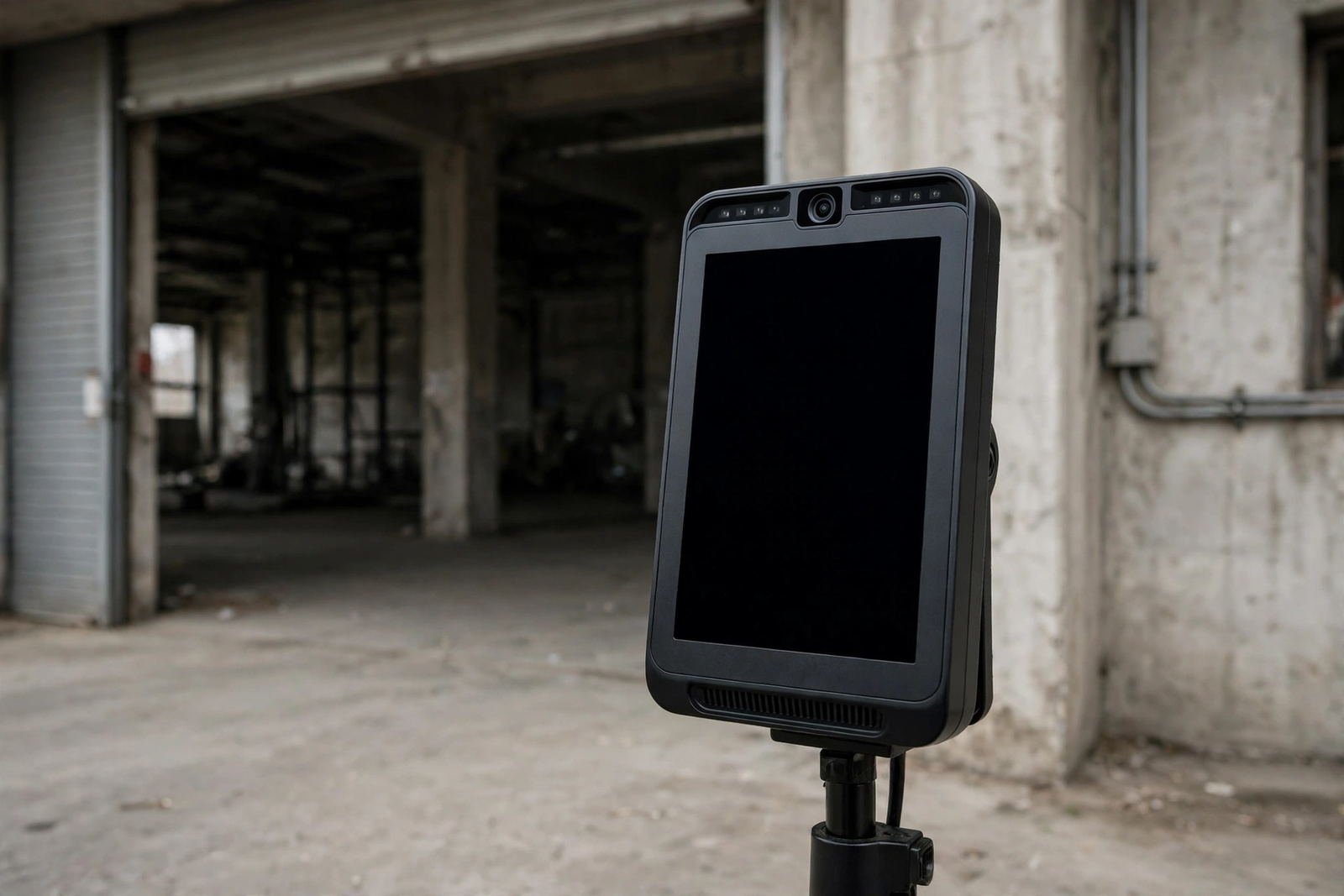
How a face-recognition register actually works
Strip away the technology, and a facial recognition attendance system does four ordinary jobs, one after another.
Step one: enrolment. Before the system can recognise anyone, it needs a reference record for each employee. A photograph is taken under controlled conditions, and the system converts the distinctive features of that face into a digital template. The template is not a photograph stored for viewing. It is a set of measurements the system can compare against later.
Step two: capture. At the start of a shift, the employee stands briefly in front of a camera at an attendance point. The camera takes an image and converts it into the same kind of template.
Step three: matching. The system compares the new template with the stored templates and looks for a match. If it finds one above its confidence threshold, it records that employee as present, along with the time.
Step four: the record. Each successful match becomes a line in a digital attendance log: who, when, and where. Because the log is digital from the start, it can be totalled, searched, and checked far more quickly than a paper register. A supervisor can see, for a given day, which employees were recorded and which were not, without waiting for registers to be collected and added up by hand.
None of these steps requires the employee to touch a shared device, carry a card, or remember a code. That contact-free quality is one reason organisations with shift workers, outdoor sites, and large headcounts find the approach attractive. It is also why the first-day report from Kothagudem matters: a system that stumbles at shift-change time, when hundreds of people arrive together, will lose confidence fast. Reports of the first day say attendance was recorded smoothly, without technical issues.
Three registers, side by side
It helps to compare the three methods SCCL has now used, because each one trades accuracy, effort, and trust differently.
| Feature | Manual register | Biometric (fingerprint) | Facial recognition |
|---|---|---|---|
| How presence is recorded | A name written by hand, or ticked off by a clerk | A fingerprint scanned at a reader | A face matched by a camera |
| Contact needed | A shared pen and book | Touching a shared reader | None, beyond standing in view of the camera |
| Risk of one person marking for another | High, if the clerk does not check faces | Low, since a fingerprint is personal | Low, since the face itself is the check |
| Speed at shift change | Slow, and queues build | Moderate, one person at a time per reader | Fast, if cameras are placed well |
| What can go wrong | Illegible entries, lost books, late totals | Worn fingerprints, dirty readers, queues | Poor light, camera angles, and low match confidence |
| Record-keeping | Paper totals, added up later | Digital, per location | Digital, and consistent across a whole area |
The table also explains why the company describes the pilot in terms of transparency. A digital log that is created at the moment of arrival is harder to rewrite after the fact than a paper page. Whether that transparency is welcomed depends on who is looking at the log, and for what purpose, which brings the story to its more contested side.
Why Kothagudem, and why now
Pilot areas are rarely chosen at random. Kothagudem is the company’s home ground: the town gives the area its name, and SCCL’s operations there span mines and departments rather than a single site. That mix makes it a useful test. If the system works across different kinds of workplaces in one area, the company can argue with some confidence that it will work in others. If it fails in one kind of workplace, the failure shows up early, while the trial is still small.
Timing matters too. November is the start of a long working stretch, and a trial launched at the beginning of a month gives the company a clean set of daily records to compare, week by week. A phased extension, which the company has already signalled, also needs a trial that produces evidence. Managers in other areas will want to know how the cameras coped with dust, light, shift-change crowds, and the practical reality of a working mine, not just how they performed in a demonstration.
There is a broader context as well. Telangana’s schools have been moving in the same direction, with face-recognition attendance at the centre of the state’s November attendance drive for government schools. SCCL’s pilot is a separate decision by a separate organisation, but it belongs to the same wider shift: large public institutions in the state are replacing manual registers with face-based records, and they are doing so at roughly the same time. For students and young workers, that means the attendance systems they meet in school, college, and their first job may soon look very similar.
The other side of the rollout
Not everyone welcomed the plan when it was first proposed. In October 2026, workers and trade union leaders opposed the introduction of facial recognition attendance in SCCL’s mines. Their objections, reported at the time, were practical rather than abstract. They argued that the system would replace clerks who record attendance manually across three shifts, that buying the equipment would involve substantial spending, and that a similar system tried about fifteen years earlier had not worked. Some also argued that supervisors and executives should be brought under the same system, rather than having it apply only to workers.
Those concerns deserve a fair hearing in any honest account of the pilot, because they point to the two questions every attendance system must answer. The first is about fairness: does the same rule apply to everyone, from the newest worker to the most senior manager? The second is about purpose: is the record being kept to support people, to plan shifts and staffing honestly, or simply to watch them? A system can be technically accurate and still fail if the people it records believe it is being used unevenly.
The pilot itself may answer some of these questions. If attendance is recorded smoothly and the data is used openly, scepticism may ease. If the system struggles in mine conditions, or if its coverage stays uneven, the earlier objections will return with fresh force. Either way, the trial period is when those answers will be found, which is precisely why a pilot is run before a full rollout.
What this means for anyone who tracks attendance
Most readers of this site will never work in a coal mine, but the Kothagudem pilot still carries lessons that apply in a classroom, a college, or an office.
First, attendance is only useful when the record is complete. A register with gaps tells no one anything reliable, whether it is a paper book or a camera system. The reason SCCL stresses an area-wide system, rather than a system at a few offices, is that partial records create partial pictures. The same logic applies to a student: a personal attendance record is only helpful if every class is counted, not just the ones that are easy to remember.
Second, the method of recording matters less than the habit of checking. A camera can record presence, but it cannot make a student attend, revise, or ask a question. The value of any attendance record lies in what happens after it is made: spotting a slide early, understanding which days are being missed, and acting while there is still time to recover. A student who checks a personal percentage every week has the same advantage that a manager gains from a daily log, which is early warning.
Third, percentages turn raw records into decisions. Knowing that a student attended 34 out of 40 classes is a fact. Knowing that this equals 85% is a judgement-ready figure, because most institutions set their expectations as percentages. The same arithmetic sits behind the Kothagudem pilot: individual records become area totals, and area totals become the basis for planning. Anyone who wants to keep their own record in order can use the same simple formula: divide the number of classes attended by the total number of classes held, then multiply by 100. Guides on how to check your attendance percentage and the average attendance formula walk through that calculation step by step, and the tactics in how to improve employee attendance show how organisations try to move those numbers in the right direction.
Questions readers are asking
What is the Singareni facial recognition attendance pilot?
It is a trial of a camera-based attendance system across the Kothagudem Area of the Singareni Collieries Company Limited, launched on November 2, 2026. Around 1,600 employees in the area’s mines and departments have their attendance recorded by facial recognition during the trial.
How is facial recognition attendance different from biometric attendance?
Biometric attendance usually means a fingerprint or similar physical marker scanned at a reader. Facial recognition uses a camera to match a person’s face to a stored template, without touching a device. SCCL already uses biometric systems at some offices, while the Kothagudem trial is its first area-wide facial recognition rollout.
How many employees does SCCL have, and how many are in the pilot?
SCCL employs around 40,000 people in total. About 1,600 of them work in the Kothagudem Area covered by the pilot, so the trial involves a small fraction of the company’s workforce while its results are assessed.
Will the system be extended to other SCCL areas?
The company has said the system is expected to be extended to mines and departments in other areas in a phased manner. A phased rollout means later areas follow only after the pilot’s performance has been reviewed, rather than all areas switching at once.
Can students use the same idea to track their own attendance?
Yes, in a simpler form. A student does not need a camera system to keep a reliable record. Counting classes attended against classes held, and converting that into a percentage each week, gives the same early warning that a digital log gives an organisation, and it can be done with a notebook or a calculator.
For anyone who wants to put that habit into practice, the attendance calculator on this site turns attended and total classes into a percentage in seconds, so a weekly check becomes a habit rather than a chore. Try it at https://attendancepercentagecalc.com/ and see where the current term stands before the next attendance review.