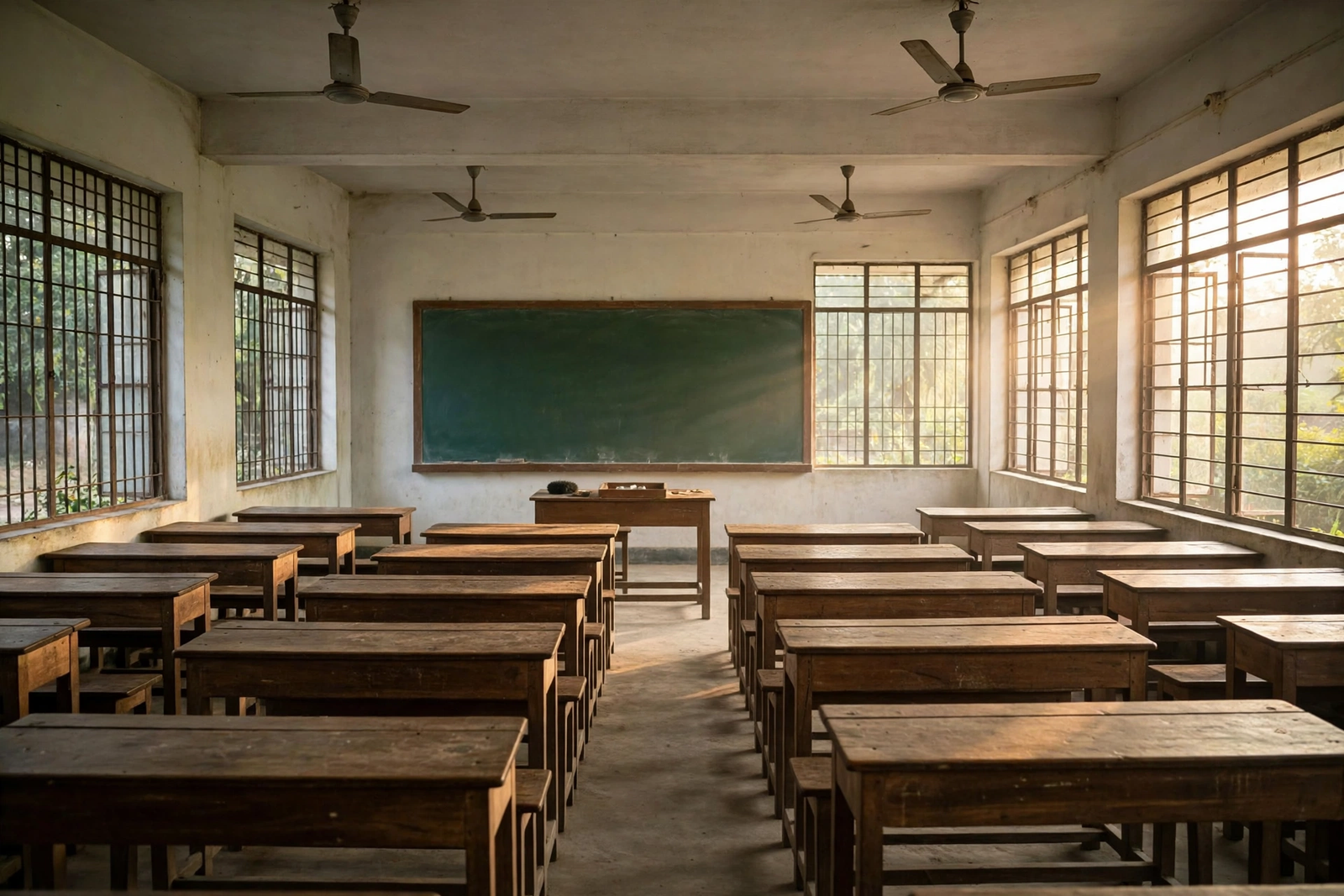
For generations, the school day in West Bengal has begun the same way. A teacher stands at the front of the classroom, opens a register, and calls out names one by one while students answer present. It is a ritual so familiar that most people never stop to think about how much time it consumes. In a crowded classroom, working through a long roll can take several minutes of every single period, and the same process repeats in school after school, day after day.
That familiar ritual may be on its way out in West Bengal. The West Bengal School Education Department is preparing to trial an artificial intelligence based facial recognition system that records student attendance through a mobile application. Instead of calling names, a teacher will take a photograph of the classroom, and the software will identify the students it can see and mark them present.
The announcement matters well beyond West Bengal. Across India, state governments are experimenting with technology to fix one of the oldest problems in school administration: knowing, accurately and quickly, who is actually in the room. What makes this pilot different is the method. It does not ask students to queue at a machine or press a finger on a scanner. It asks a teacher to point a phone camera at the class.
The Announcement in Brief
What is happening: West Bengal will test an AI facial recognition attendance system in 100 government and government-aided schools.
Who is behind it: The West Bengal School Education Department is developing the system, and the trial will run through a mobile application built for the purpose.
When it starts: The pilot is likely to begin after the Puja vacation, once schools reopen. A wider rollout across the state is planned from January 2027 if the pilot delivers good results.
How it works: Teachers photograph the classroom on their phones. The application uses facial recognition to identify students in the photograph and produces a list of those present.
What it replaces: The daily practice of calling out names or roll numbers and writing attendance into a register, a process that can take a meaningful slice of teaching time in large classes.
What comes first: Students will be photographed and their details added to a digital database created before the system goes live, so the software has reference images to match against.
Reports published on November 9 first carried the details of the plan, and the story was picked up widely the following day. According to the coverage, the department has selected the hundred schools for the first phase, and the application is already under development.
How the AI Attendance System Will Work
The system sounds futuristic, but the steps behind it are straightforward. Each one solves a specific problem that the old register method handles poorly, and together they describe a complete change in how a school day begins.
Step 1: Building the student database
Before any photograph can be matched, the system needs to know what each student looks like. Students in the pilot schools will be photographed, and their details will be added to a digital database created in advance of the rollout. This is the foundation of the whole project. Without accurate reference images, the software cannot recognise anyone, and without careful data handling, the database itself becomes a concern. The department will need to get this first step right, because every later step depends on it.
Step 2: The teacher opens the app
When the school day begins, the teacher opens a special application on a mobile phone instead of opening a paper register. The app is the single point of contact between the teacher and the attendance system. It is designed to be quick to open and simple to use, because a tool that slows a teacher down will not survive contact with a real classroom.
Step 3: One photograph of the classroom
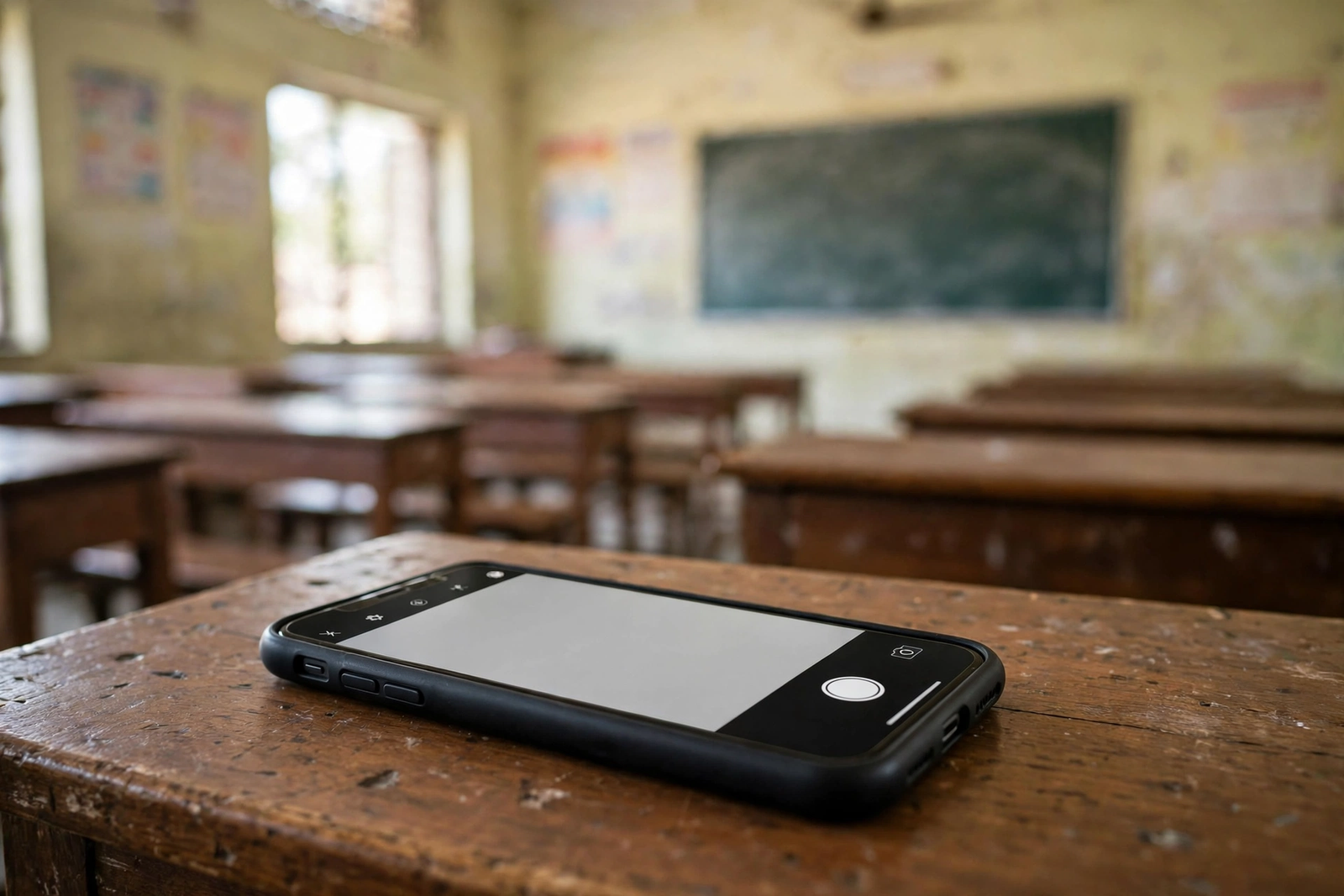
Inside the classroom, the teacher takes a single photograph that captures the students present. This is the moment that replaces the roll call. There is no queue, no name-by-name calling, and no writing. The photograph is the attendance record, and the software does the work of reading it.
Step 4: The software identifies each student
The application uses artificial intelligence powered facial recognition to identify the students visible in the photograph. It compares the faces in the classroom photo against the reference images in the database and produces a list of the students it recognises as present. The list is generated automatically, which removes the copying errors and missed names that creep into handwritten registers.
Step 5: The daily record goes online
Once verification is complete, the application records the attendance in a daily logbook online. The system can also track and locate students who are missing from school, giving the school a same-day picture of who is absent rather than a register that sits in a cupboard until someone asks for it. That daily, digital record is one of the biggest practical changes. Attendance stops being a piece of paper and becomes data that the school and the department can actually use.
The source report on the plan describes the aim plainly: the system should reduce the time teachers spend on routine administrative work and make the process faster and more convenient. For the full details of the announcement, readers can see the original coverage of the West Bengal facial recognition attendance trial.

Roll Call vs Face Scan: What Changes in the Classroom
The clearest way to judge the pilot is to compare it directly with the method it replaces. The two approaches differ in almost every respect that matters to a school.
| Roll Call (the Old Way) | Face Scan (the New Way) | |
|---|---|---|
| How attendance is taken | Teacher calls each name or roll number aloud and waits for a response | Teacher photographs the classroom and the app identifies students |
| Time it takes | Several minutes per period, longer in large classes | A single photograph, processed in moments |
| Who does the work | The teacher, name by name | The software, once the photograph is taken |
| Where the record lives | A paper register, then possibly copied into another book | A daily logbook online, available the same day |
| Accuracy | Depends on hearing, attention, and handwriting | Depends on image quality, lighting, and recognition accuracy |
| What can go wrong | A name is missed, a mark is copied incorrectly | A face is not recognised, a student is blocked from view |
| Follow-up on absence | Slow, because the register stays in the classroom | Fast, because missing students can be flagged the same day |
| What it needs to work | A register and a voice | A phone, a charged battery, light, and a network connection |
| What it asks of families | Nothing new | A photograph of their child for the database, and trust in how it is kept |
The table makes the appeal obvious. A teacher with a large class gets teaching time back. A school gets attendance data that is current rather than historical. A department gets numbers it can act on the same day instead of at the end of a term.
It also makes the risks obvious. A roll call works even when the lights are poor and the network is down. A camera system depends on both. A register can be read by anyone. A facial database can only be read by software, and the people whose faces are in it deserve to know how it is stored.
What It Means for Students
For students, the most immediate change is the simplest one: no more waiting through the roll call. The morning starts faster, and the first minutes of class belong to teaching rather than administration. Students who arrive on time will be recorded as present without any action on their part, which removes the small daily friction of answering to a name in a long list.
There is a second change that matters more. Attendance recorded this way is harder to dispute and harder to get wrong. A student who is present will be in the photograph. A student who is absent will be flagged the same day, which means a school can follow up sooner rather than discovering a pattern of absence weeks later. For students who struggle with attendance, earlier attention from the school can be the difference between a problem that gets fixed and one that grows quietly.
There is also a new responsibility. Students will need to be photographed for the database, and they will need to be visible in the classroom photograph for the system to recognise them. Sitting at the back of a crowded room, behind a taller classmate, could mean the software misses a student who is actually there. The pilot will need a clear process for correcting mistakes, because a wrongly marked absence is worse than a slow roll call.
What It Means for Teachers
Teachers gain the most obvious benefit. The daily routine of calling names and writing marks is one of the most repetitive parts of the job, and in schools with large classes it eats into teaching time in every period. The new system promises to hand that time back. A single photograph replaces a process that can stretch across several minutes, and the record it produces is already digital, so there is no later job of copying figures into another book or system.
The change also shifts responsibility. Instead of managing a register, the teacher manages a device and a photograph. That sounds simpler, and in a well-lit classroom with a working phone it probably is. But teachers will also be the first people to deal with the problems: a student the software fails to recognise, a phone that will not focus, a classroom where the light makes faces hard to read.
What It Means for Parents
Parents may notice the change before anyone explains it to them. The school will ask for their child’s photograph for the database, and that request deserves a clear explanation: what the image is used for, where it is stored, how long it is kept, and who can access it. A system that records children’s faces carries a responsibility that a paper register never did.
On the other side, parents stand to gain a faster flow of information. When attendance is logged digitally each day, a school can tell a parent sooner that their child was absent. That early notice is genuinely useful, especially for families who want to catch an attendance slide before it becomes a serious gap. Parents can also keep their own check on the numbers by learning how to track attendance and by using the school attendance calculator to work out what a missed week does to the overall percentage.
The Privacy Question Nobody Can Skip
No honest account of this pilot can skip the privacy question, because it is the question that will decide whether the system is trusted. Facial recognition is not the same as a fingerprint on a scanner or a card tapped at a gate. A face is visible everywhere, it cannot be changed, and a database of children’s faces is a sensitive thing to build and hold.
The concerns are practical rather than abstract. Who holds the database, and how is it protected? How long are the reference photographs kept, and what happens to them when a student leaves the school? Can a parent see what has been stored about their child, and can they ask for it to be removed? These are questions the department will need to answer clearly before the pilot expands, and the answers will matter as much as the technology itself.
There is also a wider context. The same week the West Bengal plan was reported, a global map from Privacy International documented how facial recognition systems are being bought, mandated, or quietly installed in schools around the world, often before families have a say. Karnataka, meanwhile, has ordered face-scan attendance for government and aided schools starting in the 2026-27 school year, covering tens of thousands of schools and more than five million students. The direction of travel is clear. The safeguards have to keep pace with it.
None of this means the West Bengal pilot is a bad idea. It means the pilot has two jobs: proving the technology works, and proving it can be trusted. The first job is about cameras and software. The second is about rules, transparency, and the right of families to know what happens to their children’s data.
What Happens Next
The sequence from here is short and clear. The pilot will begin in the hundred selected schools after the Puja vacation, with the mobile application in teachers’ hands and the student database already prepared. The department will watch how the system performs in real classrooms: how accurate the recognition is, how much time it saves, how often it makes mistakes, and how teachers and families respond to it.
If the trial delivers good results, the plan is to extend the system more widely across West Bengal from January 2027. That is a fast timetable, and it means the pilot phase will be judged quickly. A system that works smoothly in a hundred schools will have a strong case for expansion. A system that struggles with accuracy or trust will need more time.
Frequently Asked Questions
How many schools are part of the West Bengal facial recognition attendance pilot?
The pilot will run in 100 selected government and government-aided schools across West Bengal. The trial will begin after the Puja vacation.
How does the AI attendance system mark students present?
The teacher takes a photograph of the classroom using a special mobile application. The app uses facial recognition to identify the students visible in the photo, compares them with a database of reference images created beforehand, and automatically produces a list of students present.
When will the system be rolled out across all West Bengal schools?
If the pilot in the hundred schools delivers good results, the state government plans a wider rollout from January 2027. The expansion depends on how the trial performs in real classrooms.
Will students need to do anything different under the new system?
Students will be photographed so their details can be added to the digital database before the system starts. On a normal school day, they simply need to be present and visible in the classroom photograph for the software to recognise them.
What happens if the system fails to recognise a student who is present?
The reports on the plan do not spell out a correction process, but any attendance system needs one. Students and parents should ask their school how a missed recognition can be corrected, so a technical error never becomes a wrongly recorded absence.
Students, parents, and teachers can check attendance figures at any time with the free attendance percentage calculator, which works out the percentage from days attended and total days, whatever system the school uses to keep its records. West Bengal has debated new attendance technology before, when the state board called for biometric attendance in schools, and this pilot is the next step in that same conversation.