Skip to main content


Telangana’s residential welfare schools have been given a short, concrete deadline: make sure every student has the uniforms and materials they need by November 2. The direction came after a review meeting chaired by the society’s secretary, and it is paired with an equally clear instruction on attendance: record it every day, and record it fully.
The meeting matters because these are not ordinary day schools. Students live on campus, so a missing uniform, bag, or identity card is not a minor inconvenience. It affects daily routine, identity, and whether a student can take part fully in school life. The November 2 date is therefore best read as a stock-taking deadline, not a vague target.
The meeting that set the deadline
The direction was given at a meeting of the Telangana Social Welfare Residential Educational Institutions Society (TGSWREIS), chaired by its secretary, V. S. Alagu Varsini. According to a report in The New Indian Express, officials were told to complete the distribution of uniforms and materials to all students by November 2.
The meeting also reviewed the state of hostels and other facilities, but the distribution deadline was the most time-bound instruction to emerge from it. The message was practical: identify what is missing, complete it, and do not leave the shortfall to be discovered later.
Who runs these schools, and why that matters
TGSWREIS runs residential schools for students from Scheduled Caste communities across Telangana. Its schools combine classroom teaching with hostel life, which means the institution is responsible for far more than lessons: accommodation, food, health, and daily supplies all sit within the same system.
That breadth is why a distribution check is also an attendance issue. When a student lacks a uniform or a bag, the barrier is visible every morning. When materials are complete, there is one less reason for a student to be marked absent, late, or out of place. The November 2 exercise is therefore about both welfare and participation.
Two jobs in one order
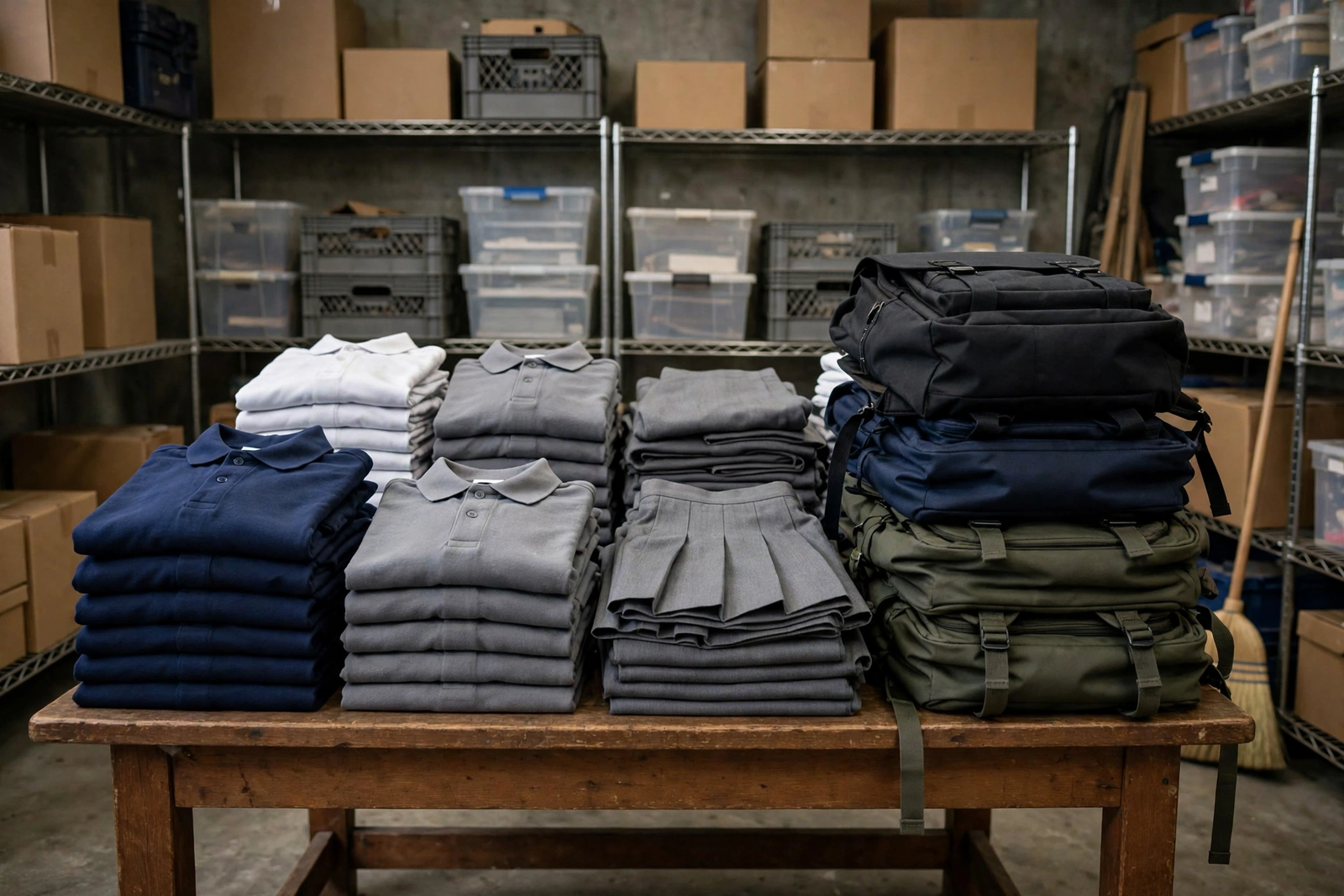
The November 2 instruction actually contains two jobs. The first is physical: distribute uniforms and materials. The second is administrative: record attendance daily, and do so at 100 per cent. The two are linked because the attendance record is how the system knows whether students are actually present to receive what is being distributed.
| Item | What was checked |
|---|---|
| Second set of uniforms | Whether every student has received the second set, and what is still pending |
| White cloth for stitching | Whether cloth has been received and passed on for stitching |
| Welfare items supplied through LIDCAP | Whether ties, belts, and identity cards have reached students |
| Socks | Whether black and white socks have been distributed |
| Trunk boxes in godowns | Whether boxes held in godowns have been identified for dispatch |
| School bags | Whether surplus bags have been redistributed to students who still need them |
The checklist shows the order is not about a single item. It is a sweep across everything a residential student needs at the start of the term: clothing, stitching material, welfare items, socks, storage, and bags.
The November 2 checklist in practice
The immediate task is distribution. Officers were asked to ensure that the second set of uniforms reaches every student, and that white cloth for stitching is also in hand. Where cloth has been received, it should be passed on for stitching without delay.
Second, officials were asked to verify welfare items supplied through LIDCAP, including ties, belts, and identity cards. These are small items, but they are the visible markers of a student’s place in the school.
Third, the verification extends to socks and storage. Black and white socks should be distributed, and trunk boxes held in godowns should be identified so they can be dispatched to the students who need them.
Fourth, surplus bags should be redistributed. If some schools hold more bags than they need while others face a shortfall, the surplus should move to where it is needed rather than remain in storage.
The discrepancy that made the deadline matter
The meeting did not only issue a forward-looking instruction. It also surfaced a discrepancy that helps explain why the deadline was set. Some principals had reported 100 per cent attendance for their institutions, while the actual strength figures did not match those reports.
In plain terms, the headcount and the attendance record did not agree. That mismatch matters because attendance data is used to plan meals, materials, and staffing. If the record overstates presence, the system may assume needs are met when they are not. The instruction to record attendance daily at 100 per cent is, in that light, a call for accuracy as much as for coverage.
Why face recognition is now part of the story
The report also notes that a face-recognition system has been introduced in these schools. For a residential institution, that change is significant: it replaces a manual or easily adjusted record with a system that ties attendance to a student’s physical presence.
Face recognition does not by itself solve distribution problems. A student can be present and still lack a uniform. But it does make the attendance figure harder to inflate, which is the point at issue in the discrepancy described above. It creates a record that can be checked against strength figures, hostel rolls, and material distribution lists.
It is also important to separate the technology from the target. A 100 per cent recording target means every student’s attendance should be recorded every day. It does not mean every student must be present every day; illness, leave, and other authorised absences will still occur. The target is about the completeness of the record, not the impossibility of perfect attendance.
For students, the practical effect is that their presence becomes visible in a more consistent way. For administrators, the effect is that the daily record becomes a usable planning tool rather than a formality.
What a parent or guardian should check
For families, the November 2 deadline is a useful prompt, even though the instruction is directed at institutions. A parent or guardian can ask a simple set of questions at the next visit or call:
First, has the student received the second set of uniforms, and has white cloth been given for stitching where that applies? Second, have ties, belts, and identity cards been received? Third, have black and white socks been distributed, and has the student received a trunk box or bag where one was needed? Fourth, is the student’s daily attendance being recorded, and does the school’s record match the student’s own account of attendance?
Students themselves can help by reporting a missing item promptly rather than waiting for the next inspection. In a residential setting, a missing uniform or bag is noticed quickly by peers and teachers, but a quiet report to a warden or teacher is more likely to be acted on than silent adjustment.
Frequently asked questions
What is TGSWREIS?
TGSWREIS is the Telangana Social Welfare Residential Educational Institutions Society. It runs residential schools for students from Scheduled Caste communities in Telangana, combining classroom education with hostel facilities.
What is the November 2 deadline about?
It is the date by which officials were directed to complete the distribution of uniforms and materials to all students in these residential schools. The instruction followed a review meeting chaired by the society’s secretary.
What attendance target was set?
Officials were directed to record attendance daily at 100 per cent. That means the attendance of every student should be recorded every day, so the record is complete and can be checked against actual strength.
Can a parent check a student’s attendance online?
The report does not name a parent-facing portal for these schools. The direction is to institutions to record attendance daily and accurately. Parents should ask the school or hostel directly for the student’s attendance record.
Does 100 per cent attendance mean no student can ever be absent?
No. It means the record should be complete. Students may still be absent for illness or authorised leave, but those absences should be recorded as absences, not hidden by an inflated attendance figure.
What to watch after November 2
After November 2, the test is whether the distribution is actually complete, not whether the deadline was announced. Families, officials, and the society itself will be able to check the same simple facts: did every student receive the second uniform, the stitching cloth, the welfare items, socks, and a bag or trunk box where needed?
The attendance side of the order will be tested in the same way. If daily records now match strength figures more closely, the discrepancy that prompted the instruction will have narrowed. If they still diverge, the face-recognition system and the daily recording instruction will face a further test.
For related reading, see our attendance calculator, our guide to CBSE attendance rules for Class 10, our guide on whether attendance is compulsory, and our guide to how to calculate average attendance of students.